
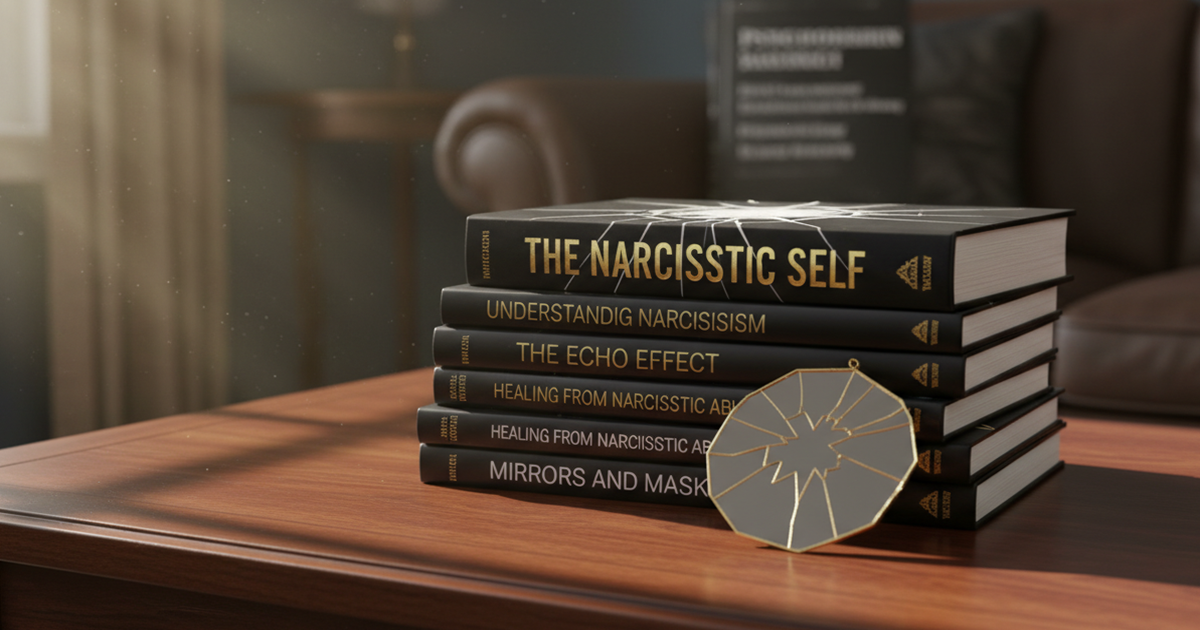
Navigating the complex world of narcissistic personality disorder can feel overwhelming, whether you're trying to understand a narcissist in your life, recovering from narcissistic abuse, or seeking professional knowledge. Books on narcissism provide invaluable insights, validation, and practical strategies for healing and understanding this challenging personality disorder.
This comprehensive guide explores the most impactful books on narcissism, helping you choose the right resources for your specific needs and recovery journey.
Understanding Narcissism: Why These Books Matter
Narcissistic personality disorder affects approximately 1-2% of the population, but its impact extends far beyond those diagnosed. Family members, romantic partners, colleagues, and friends of narcissists often experience profound psychological and emotional trauma. Books on narcissism serve multiple crucial purposes:
They provide education about narcissistic behaviors and patterns, offering clarity to those confused by manipulative tactics. These resources validate the experiences of abuse survivors who may have been gaslit or made to question their reality. Professional therapists and counselors rely on authoritative texts to better serve their clients dealing with narcissistic relationships.
Understanding narcissism through literature empowers individuals to recognize red flags, establish boundaries, and begin their healing journey with informed awareness.
Categories of Books on Narcissism
Books addressing narcissism generally fall into several distinct categories, each serving different reader needs and knowledge levels.
Clinical and Diagnostic Literature
These academic and professional texts explore narcissistic personality disorder from a psychiatric perspective. Written primarily for mental health professionals, they delve into diagnostic criteria, theoretical frameworks, and treatment approaches. While dense and technical, they offer the most authoritative understanding of NPD as a mental health condition.
Recovery and Healing Resources
Recovery-focused books speak directly to survivors of narcissistic abuse. They acknowledge the trauma, validate feelings, and provide practical strategies for healing. These resources address topics like rebuilding self-esteem, processing complex emotions, recognizing trauma bonds, and moving forward after narcissistic relationships.
Relationship Navigation Guides
Some books focus specifically on managing or exiting relationships with narcissists. These practical guides help readers identify narcissistic patterns in partners, parents, or family members, and provide strategies for setting boundaries, communicating effectively, or safely leaving toxic relationships.
Educational Overviews
General educational books make narcissism accessible to mainstream audiences. Written in approachable language, they explain narcissistic traits, behaviors, and impacts without requiring prior knowledge of psychology or mental health terminology.
Essential Books on Narcissistic Personality Disorder
Several foundational texts have shaped our understanding of narcissism and remain essential reading for anyone seeking comprehensive knowledge.
Classic Foundational Texts
Early psychological literature laid the groundwork for understanding narcissism as a personality disorder. These texts explored the developmental origins of narcissistic traits, examining how childhood experiences, parenting dynamics, and attachment patterns contribute to narcissistic personality formation.
Psychoanalytic perspectives examined the false self that narcissists present to the world, contrasting it with the fragile inner self hidden beneath grandiose exteriors. Understanding this internal dynamic helps explain seemingly contradictory narcissistic behaviors.
Contemporary Clinical Perspectives
Modern clinical books incorporate decades of research and therapeutic experience. They present updated diagnostic criteria aligned with current mental health manuals, explore various subtypes of narcissism including covert and malignant variants, and discuss evidence-based treatment approaches for both narcissists and their victims.
Contemporary authors recognize that narcissism exists on a spectrum, from mild narcissistic traits to full-blown personality disorder. This nuanced understanding helps readers assess their situations more accurately.
Best Books for Recovering from Narcissistic Abuse
Recovery from narcissistic abuse requires specialized resources that address the unique trauma patterns these relationships create.
Understanding Trauma Bonds
Books exploring trauma bonding explain why victims struggle to leave narcissistic relationships despite obvious harm. They describe the intermittent reinforcement pattern that creates powerful psychological attachments, detail the cognitive dissonance victims experience, and provide strategies for breaking free from these unhealthy bonds.
Trauma bonding occurs when periods of abuse alternate with moments of kindness, creating confusion and addictive attachment patterns. Understanding this mechanism is crucial for recovery.
Rebuilding Self-Worth
Narcissistic abuse systematically dismantles victims' self-esteem through constant criticism, gaslighting, and emotional manipulation. Recovery books address rebuilding identity after prolonged abuse, recognizing and challenging internalized negative messages, developing healthy self-compassion, and establishing new patterns of self-care.
Many survivors report feeling like they've lost themselves in narcissistic relationships. Books focused on self-worth help readers rediscover their authentic identity and value.
No Contact and Boundaries
Establishing and maintaining boundaries with narcissists presents unique challenges. Specialized books provide practical guidance on implementing and maintaining no contact, managing shared custody situations with narcissistic co-parents, responding to hoovering and manipulation attempts, and protecting yourself legally and emotionally.
No contact often represents the most effective strategy for healing, but implementation requires knowledge, planning, and sustained commitment. These books serve as roadmaps for this difficult process.
Books on Narcissistic Parents and Family Dynamics
Growing up with narcissistic parents creates lasting impacts that extend well into adulthood. Specialized literature addresses these unique challenges.
Childhood Effects and Adult Recovery
Books exploring narcissistic parenting examine how children develop in emotionally neglectful environments, the roles children are assigned in narcissistic family systems like scapegoat and golden child, and strategies for reparenting yourself and healing childhood wounds.
Adult children of narcissists often struggle with issues like perfectionism, people-pleasing, difficulty setting boundaries, and chronic self-doubt. Understanding the roots of these patterns facilitates healing.
Breaking Generational Patterns
Many readers seek books that help them avoid repeating unhealthy patterns with their own children. These resources explore recognizing narcissistic tendencies in yourself, developing emotionally healthy parenting practices, healing family trauma across generations, and creating secure attachment with your children.
Breaking these cycles requires conscious effort, self-awareness, and often therapeutic support alongside educational reading.
Books on Narcissism in Romantic Relationships
Romantic relationships with narcissists present particular challenges due to the intimacy and vulnerability involved.
Identifying Red Flags
Prevention-focused books help readers recognize narcissistic patterns early in relationships. They outline warning signs during dating and courtship, explain love bombing and idealization phases, discuss the devaluation and discard cycle, and identify covert narcissistic behaviors that are harder to spot.
Learning to recognize these patterns protects readers from entering or remaining in harmful relationships.
Healing After Narcissistic Relationships
Post-relationship recovery books address the specific trauma of romantic narcissistic abuse. They help readers process betrayal and loss, rebuild trust in themselves and others, recognize healthy relationship patterns, and prepare for future relationships without carrying forward trauma.
Many survivors fear they'll never trust again or will repeat the same patterns. These books provide hope and practical strategies for creating healthy future relationships.
Books for Therapists and Mental Health Professionals
Mental health professionals require specialized, evidence-based resources for working with narcissism.
Treatment Approaches and Modalities
Professional texts explore various therapeutic approaches for treating narcissistic personality disorder, including schema therapy, mentalization-based treatment, transference-focused psychotherapy, and cognitive-behavioral interventions.
Working with narcissistic clients presents unique challenges including limited insight, defensive reactions to feedback, treatment dropout, and transference complications. Professional books prepare clinicians for these obstacles.
Working with Abuse Survivors
Clinicians also need guidance for supporting clients recovering from narcissistic abuse. Specialized professional literature addresses trauma-informed approaches for narcissistic abuse, distinguishing complex PTSD from other conditions, addressing shame and self-blame in survivors, and helping clients establish safety and boundaries.
Understanding the specific dynamics of narcissistic abuse helps therapists provide more effective, empathetic treatment.
Books on Covert Narcissism
Covert narcissism, also called vulnerable or closet narcissism, operates differently from grandiose narcissism and often goes unrecognized.
Recognizing Hidden Manipulation
Books on covert narcissism help readers identify passive-aggressive behaviors, victim mentality and martyr complexes, subtle emotional manipulation tactics, and the quiet superiority that characterizes this subtype.
Covert narcissists may appear shy, anxious, or insecure, making their manipulative behaviors harder to recognize and address.
Unique Recovery Challenges
Recovering from covert narcissistic abuse presents distinct difficulties. Victims often struggle to name the abuse due to its subtlety, experience guilt for not appreciating the narcissist's "suffering," and face disbelief from others who see the narcissist as harmless or victimized.
Books specializing in covert narcissism validate these experiences and provide targeted recovery strategies.
Digital and Modern Resources on Narcissism
While traditional books remain valuable, modern formats offer additional accessibility and features.
Audiobooks and Accessibility
Audiobooks make narcissism literature accessible during commutes, exercise, or when reading is difficult. Many survivors find audiobooks less triggering than visual reading, appreciate the ability to pause during emotional content, and benefit from the supportive tone of narrator voices.
Audio formats can feel like having a compassionate companion during recovery.
Workbooks and Interactive Formats
Interactive workbooks provide structured healing exercises including journaling prompts for processing experiences, boundary-setting practice scenarios, self-assessment tools and checklists, and concrete action plans for recovery steps.
These hands-on resources complement traditional reading by facilitating active engagement with the material.
How to Choose the Right Books on Narcissism
Selecting appropriate resources depends on your specific situation and needs.
Assessing Your Needs
Consider whether you're seeking general education, currently in a narcissistic relationship, recovering after leaving, dealing with a narcissistic parent or family member, or supporting someone else's recovery.
Your current situation determines which books will prove most helpful and relevant.
Evaluating Author Credentials
Look for books written by licensed mental health professionals with specialized training, survivors who combine personal experience with extensive research, authors with established reputations in trauma and personality disorders, and books with positive reviews from both professionals and readers.
Credential evaluation helps ensure you're accessing accurate, helpful information rather than potentially harmful material.
Reading Reviews and Recommendations
Check reviews on multiple platforms, look for feedback from readers in similar situations to yours, note any warnings about triggering content, and consider recommendations from therapists or support groups.
Reviews provide insight into how the book actually impacts readers beyond what the description promises.
Common Themes Across Narcissism Literature
Despite different focuses, books on narcissism share several important themes.
Validation and Recognition
Nearly all narcissism books emphasize validating survivors' experiences. They confirm that gaslighting is a real form of abuse, acknowledge that the confusion and pain are legitimate, recognize that healing is possible though challenging, and affirm that readers are not crazy, oversensitive, or at fault.
This validation often represents the first step in recovery, helping survivors trust their perceptions again.
The Importance of Self-Focus
Books consistently redirect attention from the narcissist to the survivor. They encourage readers to stop trying to understand or fix the narcissist, focus instead on their own healing and growth, recognize what they can and cannot control, and invest energy in self-care rather than the relationship.
This fundamental shift in focus enables actual progress and recovery.
Patterns Over Promises
Literature on narcissism teaches readers to trust patterns of behavior rather than occasional kind words or promises. Books emphasize that actions reveal true character more than words, consistent patterns predict future behavior, and change requires sustained effort over time, not momentary gestures.
Learning to observe patterns protects readers from repeated manipulation.
Books Addressing Specific Narcissistic Behaviors
Some books focus on particular narcissistic tactics and behaviors.
Gaslighting and Reality Distortion
Gaslighting represents one of the most damaging narcissistic tactics. Specialized books explore how gaslighting undermines victims' trust in their own perceptions, creates confusion and self-doubt, isolates victims from external reality checks, and maintains the narcissist's control.
Understanding gaslighting helps survivors recognize when it's happening and resist its effects.
Triangulation and Flying Monkeys
Books addressing these tactics explain how narcissists pit people against each other, recruit others to support their narrative, isolate victims from support systems, and manipulate public perception.
Recognizing these patterns helps survivors understand confusing dynamics in their social circles and families.
Hoovering and Relationship Cycling
Hoovering refers to attempts to pull victims back after they've left. Books describe the common hoovering tactics narcissists use, why no contact remains important despite hoovering, how to respond to or ignore contact attempts, and patterns of relationship cycling with narcissists.
Preparation for hoovering strengthens resolve and reduces the likelihood of returning to abusive relationships.
Cultural and Contextual Perspectives
Narcissism exists across cultures, but its expression and impacts vary.
Cultural Variations in Narcissism
Some books explore how narcissistic behaviors manifest differently across cultures, how collectivist versus individualist societies shape narcissistic expression, how family structures influence narcissistic dynamics, and how cultural norms affect recognition and reporting of narcissistic abuse.
Cultural awareness ensures more inclusive and accurate understanding of narcissism.
Narcissism in Professional and Institutional Settings
Books examining workplace and institutional narcissism address narcissistic bosses and leadership, organizational cultures that enable narcissism, professional consequences of narcissistic behavior, and strategies for managing workplace narcissism.
Understanding narcissism in professional contexts helps protect career and mental health.
Criticisms and Limitations of Narcissism Literature
While valuable, books on narcissism have some limitations worth noting.
Risk of Misdiagnosis
Popular narcissism books sometimes lead readers to incorrectly label anyone who behaves selfishly as narcissistic, conflate normal relationship problems with narcissistic abuse, or apply clinical diagnoses without proper qualification.
Clinical diagnosis requires professional evaluation, not self-help book assessment.
Oversimplification Concerns
Some critics argue that popular books oversimplify narcissism by presenting all narcissists as identical, ignoring the spectrum nature of narcissistic traits, or failing to address the complexity of personality disorders.
Maintaining awareness of these limitations ensures more nuanced understanding.
Complementary Resources Beyond Books
Books work best as part of a comprehensive approach to understanding and healing.
Professional Therapy
Reading should complement, not replace, professional mental health support. Therapists provide personalized guidance, safe space for processing trauma, professional assessment and diagnosis, and accountability and support throughout recovery.
Books educate, but therapy facilitates deep healing.
Support Groups and Communities
Online and in-person support groups offer connection with others who understand, validation from shared experiences, practical advice from those further in recovery, and reduced isolation.
Community support reminds survivors they're not alone in their experiences.
Building Your Narcissism Reading List
Creating a strategic reading plan maximizes benefit and prevents overwhelm.
Starting with Foundations
Begin with one or two highly-rated general books on narcissism, then add resources specific to your situation like narcissistic parents or romantic relationships, include at least one recovery-focused book, and consider adding a workbook for practical application.
A manageable reading list prevents information overwhelm while ensuring comprehensive understanding.
Pacing Your Reading
Recovery reading requires emotional management. Take breaks when content becomes triggering, journal or process as you read, discuss material with trusted friends or therapists, and allow time to implement insights before consuming more information.
Reading about narcissism can be emotionally intense. Pacing protects your mental health.
Conclusion: Empowerment Through Knowledge
Books on narcissism provide essential education, validation, and guidance for understanding narcissistic personality disorder and recovering from narcissistic abuse. Whether you're seeking to understand a narcissist in your life, healing from past abuse, or supporting others through recovery, the right books offer invaluable tools and insights.
Knowledge empowers you to recognize patterns, establish boundaries, and reclaim your life from narcissistic manipulation. While reading alone cannot replace professional support, it forms a crucial component of recovery and understanding.
Choose books that address your specific needs, pace your reading to protect your emotional wellbeing, and remember that healing is a journey. Each page you read represents a step toward clarity, strength, and freedom from narcissistic abuse.
Your recovery matters, your experiences are valid, and the path forward begins with understanding. These books on narcissism can light that path, offering hope and practical guidance for creating a healthier, more authentic life beyond narcissistic relationships.