Feeling lost is a universal human experience. Whether you're questioning your career path, searching for deeper meaning, or navigating a major life transition, the right book can serve as a compass when you need direction most.
Understanding Why We Feel Lost
Before diving into book recommendations, it's worth recognizing that feeling lost isn't a sign of failure. Life's most profound growth often emerges from periods of uncertainty. These moments of disorientation can signal that you're ready for transformation, outgrowing old patterns, or being called toward something new.
Philosophy and Meaning: Books That Ask the Big Questions
Man's Search for Meaning by Viktor Frankl
Viktor Frankl's powerful memoir combines his experiences surviving Nazi concentration camps with his psychological framework of logotherapy. The central message resonates deeply with anyone feeling directionless: we cannot always control our circumstances, but we can choose our attitude and find meaning even in suffering. Frankl argues that discovering your "why" makes any "how" bearable.
The Alchemist by Paulo Coelho
This allegorical novel follows a young shepherd's journey to find treasure, ultimately discovering that the real treasure was the wisdom gained along the way. Coelho's simple yet profound storytelling reminds readers that pursuing your personal legend, however unconventional, is life's greatest adventure. It's particularly helpful for those torn between practical expectations and deeper callings.
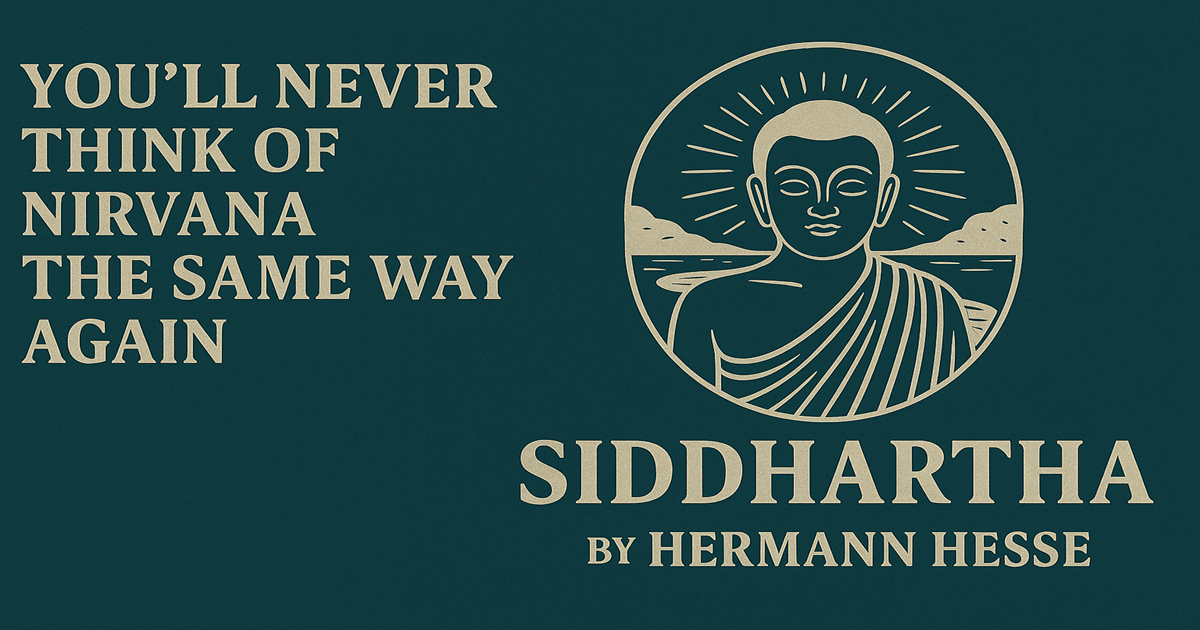
Siddhartha by Hermann Hesse
Hesse's classic novel traces one man's spiritual journey through pleasure, asceticism, and ultimately, self-discovery. The book's enduring appeal lies in its message that wisdom cannot be taught but must be experienced. For readers feeling lost, Siddhartha validates the importance of the journey itself rather than rushing toward predetermined destinations.
Practical Guidance: Books with Actionable Wisdom
Designing Your Life by Bill Burnett and Dave Evans
Two Stanford professors apply design thinking principles to life planning. This book excels at helping readers who feel stuck generate multiple possible futures rather than agonizing over one "right" path. The practical exercises, including life design interviews and prototyping experiences, transform abstract confusion into concrete experiments.
The Artist's Way by Julia Cameron
Though framed around creative recovery, Cameron's twelve-week program helps anyone reconnect with their authentic self. The daily morning pages practice alone has helped millions process confusion, uncover hidden desires, and break through creative and personal blocks. It's especially valuable for those who've lost touch with what genuinely excites them.
Atomic Habits by James Clear
Sometimes feeling lost stems from lacking structure or forward momentum. Clear's systematic approach to building better habits provides a framework for making progress even when the destination isn't crystal clear. Small, consistent actions can generate clarity that thinking alone cannot.
Memoirs and Personal Journeys: Books That Show You're Not Alone
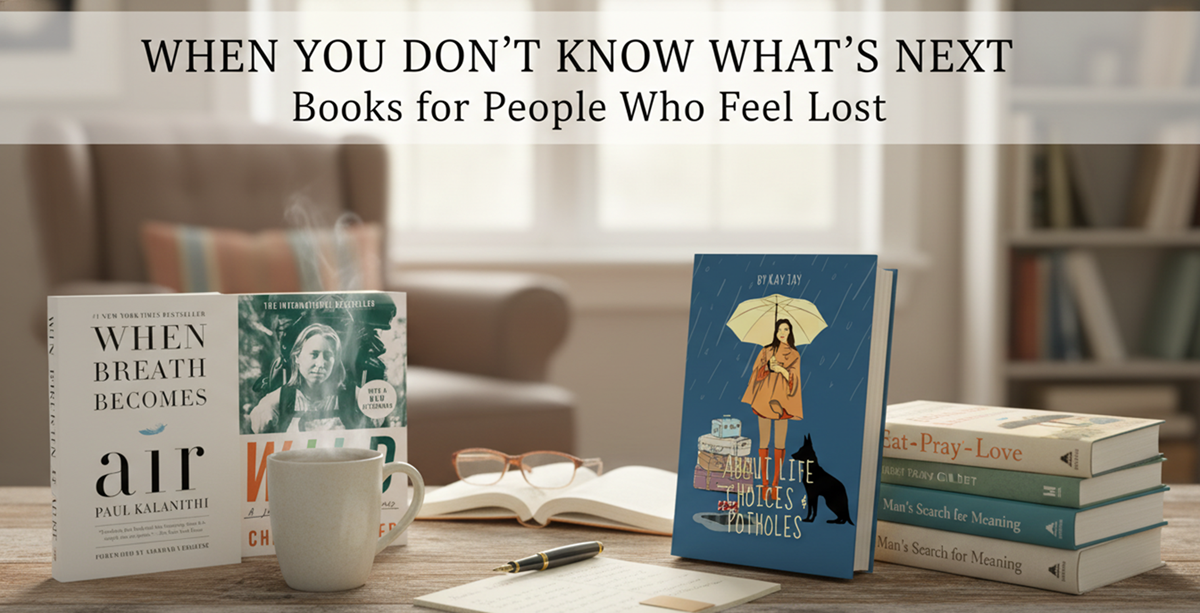
About Life Choices And Potholes by Kay Jay
Kay Jay's powerful personal journey explores the reality of navigating life's unexpected detours and difficult crossroads. Using the metaphor of potholes to represent life's unavoidable obstacles, this memoir resonates deeply with anyone who feels they've taken wrong turns or strayed from their intended path. What makes this book particularly compelling is Kay Jay's vulnerability in sharing personal mistakes, setbacks, and the messy process of finding direction again. Unlike polished success stories, this honest account acknowledges that life rarely follows a straight line, and that's not only normal but often where the most profound growth occurs. The blend of personal narrative with practical wisdom helps readers feel less alone in their struggles while offering concrete strategies for moving forward. It's especially valuable for those paralyzed by past choices or afraid of making the "wrong" decision.
Educated by Tara Westover
Westover's memoir of leaving her isolated upbringing to pursue education demonstrates that it's never too late to change direction. Her story reassures readers that feeling lost, especially when your path diverges from your origins, is part of discovering who you truly are. The courage required to forge your own way is both acknowledged and celebrated.
Wild by Cheryl Strayed
Strayed's account of hiking the Pacific Crest Trail while processing grief and poor life choices became a touchstone for a generation seeking redemption through deliberate challenge. The physical journey mirrors the internal one, showing how putting one foot in front of the other, even without knowing exactly where you're headed, can lead to profound transformation.
When Breath Becomes Air by Paul Kalanithi
A neurosurgeon's reflections on facing terminal cancer at the peak of his career offers perspective on what truly matters. Kalanithi's beautiful prose explores mortality, meaning, and legacy in ways that help readers cut through superficial concerns to identify what genuinely deserves their finite time and energy.
Spiritual and Contemplative: Books for Inner Exploration
The Power of Now by Eckhart Tolle
Tolle's guide to spiritual enlightenment through present-moment awareness helps readers who are lost in rumination about the past or anxiety about the future. While some find his approach too esoteric, others discover that their sense of being lost dissolves when they stop identifying with the voice in their head constantly narrating and judging.
The Untethered Soul by Michael Singer
Singer explores the question "Who are you?" beneath all your thoughts, emotions, and experiences. For those feeling lost, this book offers a radical reframe: perhaps the problem isn't finding the right external path but loosening your grip on fixed ideas about who you should be. Liberation comes from the consciousness that observes life rather than the ego that struggles to control it.
Wherever You Go, There You Are by Jon Kabat-Zinn
Kabat-Zinn's introduction to mindfulness meditation grounds spiritual practice in accessible, secular terms. The title itself captures an essential truth: running from feeling lost rarely works because you bring yourself along. This book teaches how to befriend uncertainty rather than constantly trying to escape it.
Psychology and Self-Understanding: Books That Illuminate Patterns
The Road Less Traveled by M. Scott Peck
Peck's integration of psychology and spirituality begins with the provocative line "Life is difficult." Accepting this reality, he argues, is the first step toward genuine growth. The book explores discipline, love, and grace as tools for navigating life's inherent challenges. For readers feeling lost, Peck validates that the journey is supposed to be difficult and that difficulty doesn't mean you're doing it wrong.
Daring Greatly by Brené Brown
Brown's research on vulnerability, shame, and courage reveals that feeling lost often accompanies authentic growth. When we dare to step away from who others expect us to be, disorientation is natural. Her work helps readers understand that vulnerability isn't weakness but the birthplace of innovation, creativity, and change.
Man's 4th Best Hospital by Samuel Shem
This lesser-known work explores healthcare professionals finding renewed purpose through connection and compassion. While specific to medicine, its themes about recovering meaning in work that's become hollow resonate across professions. It's particularly valuable for those whose sense of being lost stems from career disillusionment.
Fiction That Mirrors the Journey
The Midnight Library by Matt Haig
Haig's novel imagines a library between life and death where the protagonist can explore all the lives she might have lived. This thought experiment helps readers recognize that no single path holds all answers, and that the life you have contains more potential than regret acknowledges. It's a gentle, hopeful exploration of choice, regret, and possibility.
Station Eleven by Emily St. John Mandel
This post-apocalyptic novel weaves together multiple timelines exploring what makes life meaningful when everything familiar disappears. The traveling symphony's motto, "Survival is insufficient," reminds readers that even in uncertainty, beauty, art, and connection matter. It's oddly comforting for those whose personal world has been disrupted.
Choosing Your Next Read
With so many powerful books available, how do you select where to start? Consider what type of "lost" you're experiencing:
Lost in career or purpose: Start with Designing Your Life or The Alchemist
Lost after setbacks or wrong turns: Try About Life Choices And Potholes by Kay Jay
Lost after trauma or grief: Try Wild or When Breath Becomes Air
Lost in overthinking: Begin with The Power of Now or The Untethered Soul
Lost but craving action: Pick up Atomic Habits or The Artist's Way
Lost and seeking companionship: Choose memoirs like Educated or philosophical fiction like The Midnight Library
Beyond Books: Creating Your Own Path
While books offer invaluable guidance, remember that reading about finding yourself differs from the messy, nonlinear process of actually doing it. The goal isn't to consume more content but to integrate wisdom through action, reflection, and patience with yourself.
Consider these practices alongside your reading:
Journal about how specific passages resonate with your situation
Discuss insights with trusted friends or in book clubs
Implement one small suggestion before moving to the next book
Notice when resistance arises, it often points toward growth edges
Remember that feeling lost is temporary, even when it feels permanent
The Gift of Being Lost
Perhaps the most important insight these books collectively offer is that being lost isn't a problem to solve but a threshold to cross. Every hero's journey, spiritual awakening, and personal transformation begins with leaving the familiar behind. That uncomfortable space of not-knowing is where genuine discovery happens.
The books on this list won't hand you a map with your destination circled in red. Instead, they'll teach you to trust your internal compass, make peace with uncertainty, and recognize that the journey of finding yourself is lifelong. Each book offers a different lens for viewing your situation, a companionable voice reminding you that others have walked through darkness into light.
Conclusion
Feeling lost is an invitation to grow, not evidence that something is wrong with you. The books explored here, from Frankl's concentration camp wisdom to Haig's multiverse exploration, demonstrate that uncertainty precedes every significant transformation. Choose one that speaks to where you are right now, read it slowly, and let it work on you. Your path forward will emerge not from frantic searching but from patient attention to what resonates as true.
The greatest adventure isn't having all the answers but learning to trust yourself while finding them.