
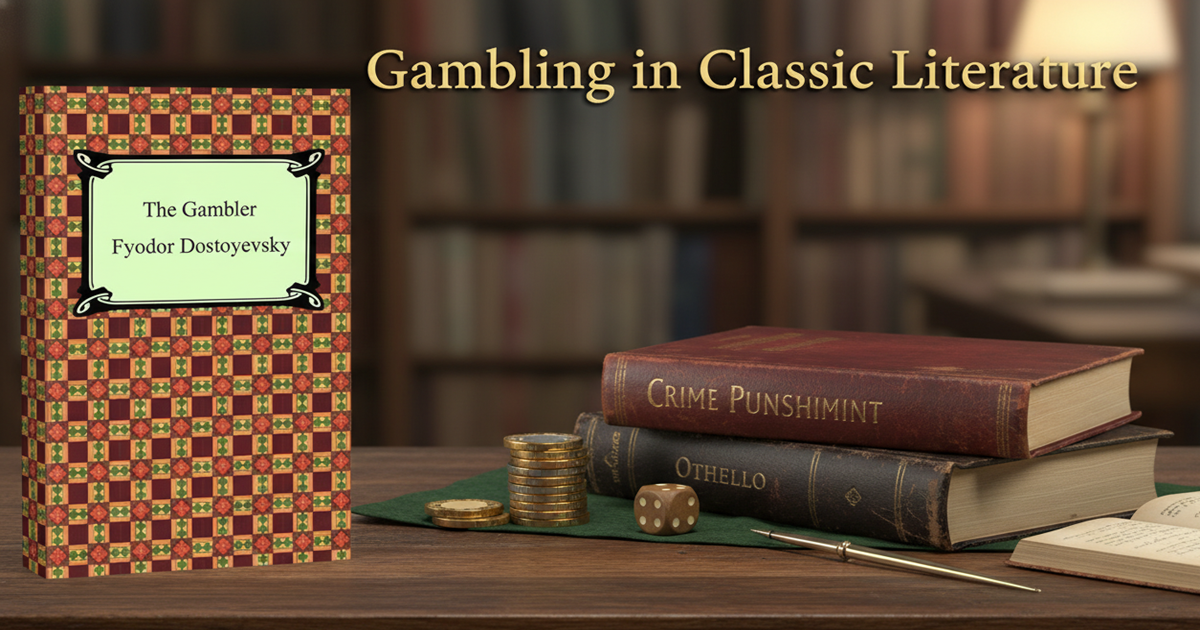
The spinning roulette wheel. The flip of a card. The intoxicating rush of risk. Long before modern casinos dominated Las Vegas, literature's greatest minds dissected humanity's dangerous love affair with chance. From psychological addiction to financial speculation, these seven classic novels reveal why we gamble with money, status, and our very souls.
The Psychology of Addiction: When Betting Becomes Obsession
The Gambler by Fyodor Dostoevsky: The Definitive Gambling Novel
If you read only one book about gambling addiction, make it Dostoevsky's brutally honest masterpiece. Written in 1866 to pay off his own catastrophic gambling debts, this novel doesn't just describe betting it crawls inside the addict's tortured mind.
Alexei Ivanovich, a young tutor in a German spa town, becomes enslaved by roulette. Dostoevsky captures every psychological stage: the initial thrill, the delusional belief in systems, the desperate chase of losses, and the complete annihilation of rational thought. What makes this novel extraordinary is its authenticity. Dostoevsky himself lost everything at European roulette tables, pawning his wife's jewelry and borrowing from anyone who'd lend.
The prose crackles with manic energy as Alexei experiences brief euphoric wins followed by crushing defeats. He bets not for money but for the emotional rollercoaster itself. Dostoevsky understood that gambling addiction isn't about greed—it's about escaping reality through manufactured drama. The novel remains the most psychologically accurate portrait of compulsive gambling ever written, decades before addiction was medically recognized.
Key themes include obsession overriding love, the illusion of control, and how desperation destroys dignity. For anyone seeking to understand why intelligent people make self-destructive choices, this novel provides devastating clarity.
High-Stakes Thrills: Gambling as Strategic Warfare
Casino Royale by Ian Fleming: Where Espionage Meets the Gaming Table
Ian Fleming's 1953 debut Bond novel isn't just spy fiction it's a masterclass in psychological gambling warfare. The climactic baccarat game between James Bond and Soviet agent Le Chiffre transforms cards into weapons of international intrigue.
Fleming, himself an experienced gambler, writes the casino scenes with technical precision. Bond doesn't rely on luck; he reads opponents, manages bankroll, and understands probability. The baccarat match becomes a battle of nerves where financial ruin means geopolitical consequences. Le Chiffre must win to repay embezzled Soviet funds, while Bond aims to bankrupt him and force defection.
What elevates this beyond typical thriller fare is Fleming's exploration of risk philosophy. Bond accepts that he might lose everything, but he gambles strategically rather than compulsively. The novel distinguishes between professional risk-taking and addiction a crucial difference Dostoevsky's characters never grasp.
The book also examines gambling's intersection with masculinity, power, and Cold War politics. Fleming suggests that calculated risk-taking, when divorced from emotional desperation, becomes a form of strategic intelligence. This perspective influenced both spy fiction and popular gambling culture for generations.
Gambling as Metaphor: Life's Uncertain Bets
The House of the Seven Gables by Nathaniel Hawthorne: Inherited Risk and Family Curses
Hawthorne's 1851 Gothic romance doesn't feature casino scenes, yet it's deeply concerned with gambling's broader meaning. The Pyncheon family's cursed mansion represents the ultimate gamble gone wrong generations paying for one ancestor's greed and treachery.
The novel explores how gambling mentality extends beyond cards and dice. Characters obsess over inheriting wealth rather than earning it, treating life as a lottery. Colonel Pyncheon's descendants gamble on discovering hidden property deeds, betting their present happiness on phantom fortunes. Hawthorne critiques American obsession with sudden wealth versus honest labor.
The "gambling spirit" here manifests as moral corruption. Characters scheme and manipulate, hoping fortune will favor them without ethical effort. Hawthorne suggests that viewing life as a game of chance, rather than a consequence of choices, leads to spiritual bankruptcy. The house itself becomes a symbol of inherited risk—each generation forced to play with stakes they never chose.
This metaphorical approach influenced later American literature's treatment of wealth, chance, and moral responsibility. Hawthorne argues that treating existence as a gamble corrupts both individual character and social fabric.
The American Dream as High-Stakes Bet
The Great Gatsby by F. Scott Fitzgerald: Life as the Ultimate Wager
Jay Gatsby's mansion parties, bootlegging fortune, and doomed romantic obsession represent the 1920s American Dream as one massive, desperate gamble. Fitzgerald's 1925 masterpiece treats wealth accumulation itself as a form of betting high risk, potentially high reward, often catastrophic failure.
While illegal gambling activities lurk in Gatsby's background (his mysterious business dealings likely include betting operations), the novel's true subject is larger. Gatsby bets his entire identity on winning Daisy Buchanan, investing years and a fortune into an impossible fantasy. His belief that wealth can erase the past and rewrite class barriers is pure gambler's delusion.
Fitzgerald captures the gambler's mindset: doubling down despite mounting evidence of failure, confusing correlation with causation, and believing sheer will can overcome probability. Gatsby's lavish parties are essentially high-stakes wagers each one betting that Daisy might attend and notice him.
The novel's tragic conclusion reveals the ultimate gambling truth: the house always wins. Tom and Daisy, old-money aristocrats, casually destroy Gatsby and retreat into their privilege. Fitzgerald suggests that in America's rigged game, only those who never really gamble those born with wealth actually prosper.
Victorian Society's Gaming Tables
Vanity Fair by William Makepeace Thackeray: Social Climbing as Calculated Risk
Thackeray's 1848 satirical masterpiece presents Victorian society as one enormous casino where reputation, marriage, and status are wagered daily. Becky Sharp, the novel's brilliantly amoral protagonist, treats life as a series of calculated bets.
Literal gambling appears throughout characters lose fortunes at cards, bet on horses, and play recklessly. But Thackeray's deeper interest lies in social gambling. Becky manipulates men, lies about her background, and schemes her way toward wealth, always risking exposure. She's a professional gambler who treats society as her casino.
The novel contrasts Becky's calculated risk-taking with others' more destructive gambling habits. Rawdon Crawley bets mindlessly; George Osborne gambles away his military pay; Jos Sedley is easily manipulated at gaming tables. Thackeray suggests that Victorian society encourages gambling mentality from stock speculation to marriage markets while hypocritically condemning actual casinos.
What makes Vanity Fair relevant is its recognition that gambling pervades respectable society. The stock exchange, social climbing, and advantageous marriages all require betting on uncertain outcomes. Thackeray argues that conventional society operates on gambling logic while pretending moral superiority to actual gamblers.
Financial Speculation: The Respectable Gamble
The Kill by Émile Zola: When Stock Markets Become Casinos
Zola's 1872 novel exposes how Second Empire Paris transformed financial speculation into socially acceptable gambling. Real estate developer Aristide Saccard manipulates markets, bribes officials, and engineers schemes that enrich him while destroying others, all perfectly legal.
Zola brilliantly parallels Saccard's financial gambling with moral corruption. As he speculates wildly on Parisian reconstruction projects, he also pursues an incestuous affair with his second wife's daughter. Both endeavors involve escalating risk, adrenaline addiction, and eventual catastrophic collapse.
The novel argues that stock market speculation and casino gambling operate identically. Both promise wealth without productive labor. Both attract addictive personalities. Both create winners by generating losers. Yet bourgeois society celebrates financial speculators while condemning roulette players a hypocrisy Zola savages mercilessly.
Zola's naturalistic style emphasizes how environment shapes behavior. Paris itself becomes a giant casino during Napoleon III's urban renovation, tempting everyone toward get-rich-quick schemes. The novel remains remarkably relevant to contemporary financial culture, predicting how speculation bubbles seduce entire societies into collective gambling fever.
What distinguishes The Kill is its recognition that "respectable" financial risk-taking often causes more social damage than casino gambling. Saccard ruins families, corrupts government, and destabilizes the economy all while society applauds his entrepreneurial spirit.
Why These Gambling Stories Still Matter
These seven novels reveal enduring truths about human nature and risk. Dostoevsky showed that gambling addiction stems from psychological desperation, not simple greed. Fleming demonstrated that strategic risk-taking differs fundamentally from compulsive betting. Hawthorne explored how gambling mentality corrupts moral thinking. Fitzgerald exposed the American Dream as a rigged casino. Thackeray revealed gambling logic pervading respectable society. Zola proved that financial speculation mirrors casino psychology.
Together, these classics explain why humans repeatedly risk everything on uncertain outcomes. They distinguish between necessary life risks and destructive compulsion. They show how societies simultaneously encourage and condemn gambling behavior depending on class context. Most importantly, they remind us that the oldest gamble is life itself and literature helps us understand the stakes.
Whether you're drawn to Dostoevsky's raw psychological realism, Fleming's strategic thrills, or Zola's social critique, these books offer profound insights into humanity's complex relationship with chance, risk, and fortune. They prove that the best gambling stories aren't really about money, they're about what we're willing to lose in pursuit of what we desire most.
Ready to explore more literary treasures? These gambling classics offer timeless wisdom about human nature, risk, and desire that remains as relevant today as when they were written. Pick up any of these seven books and discover why literature's greatest minds were fascinated by humanity's dangerous dance with chance.