A Fresh Take on Time Travel Fiction
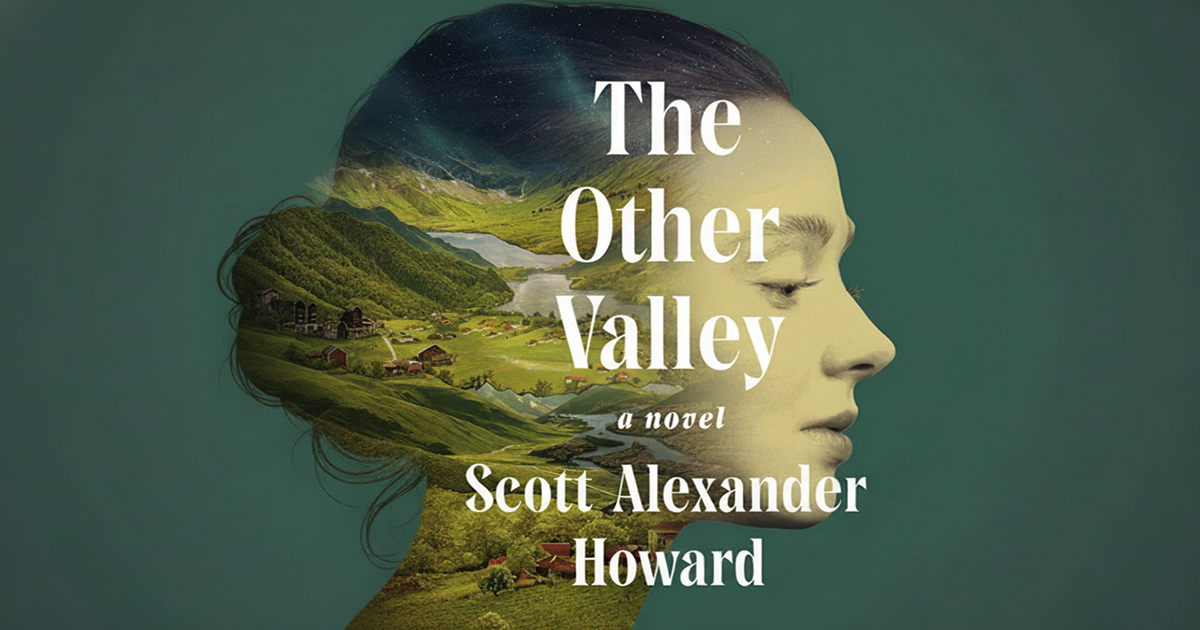
Scott Alexander Howard's debut novel offers a mind-bending take on time travel that sets it apart from traditional science fiction. Published in February 2024 by Atria Books, The Other Valley has earned starred reviews from Kirkus, Booklist, and Library Journal, establishing Howard as a significant new voice in literary speculative fiction.
Plot Summary: Valleys Separated by Time
The story centers on sixteen-year-old Odile Ozanne, an introverted girl living in an isolated valley town. The premise is deceptively simple yet profoundly original: to the east, the town is twenty years ahead in time, and to the west, it's twenty years behind, with towns repeating in an endless sequence across the wilderness.
Odile is training for a position on the Conseil, the governing body that controls access between valleys. Travel across temporal borders is heavily restricted and granted only in special circumstances, primarily for mourning tours where bereaved families can see their lost loved ones one final time.
The central conflict emerges when Odile recognizes two visitors she wasn't supposed to see and realizes that the parents of her friend Edme have been escorted from the future on a mourning tour. This revelation means Edme, the brilliant boy who truly understands her, is destined to die soon.
Odile faces an impossible choice: maintain her oath of secrecy to preserve the timeline and secure her future with the Conseil, or risk everything to warn Edme and potentially save his life.
What Makes The Other Valley Unique
No Technology Required
Unlike most time travel narratives, The Other Valley is refreshingly uninterested in technology, with characters from the futuristic neighboring valley not visiting bearing tools and gadgets. Time travel here is as simple as walking across a border. This elegant simplicity allows the story to focus on human emotions and philosophical questions rather than scientific mechanics.
Literary Speculative Fiction
Howard, who holds a PhD in philosophy from the University of Toronto and was a postdoctoral fellow at Harvard, brings intellectual depth to his narrative. The novel is a quiet meditation on grief and love that finds itself in conversation with larger philosophical debates such as the nature of mortality, fate versus free will, and how far a person will go to spend more time with those they love.
Character-Driven Narrative
Odile is a wonderfully realized character, with burgeoning friendships, a conflicted relationship with her mother, and a transition from timidity to self-assurance. The first-person narration creates an intimate connection with readers, making her moral dilemma feel deeply personal.
Major Themes Explored
Grief and Mourning
Centering time travel on mourning helps establish the way grief will become a central theme of the novel. The Conseil's restriction of travel to mourning tours only emphasizes how the novel uses its speculative premise to explore loss and the human desire to hold onto those we love.
Free Will vs. Determinism
The Other Valley explores the boundaries of free will, with the power Odile has to change the past or fall mercy to an unkind future explored until the final pages. The novel never provides easy answers, instead inviting readers to grapple with these questions themselves.
Ethical Dilemmas and Moral Complexity
Ethical dilemmas persist beyond the vetting program, with the Conseil's presence serving to underscore a utilitarian perspective prioritizing the welfare of the majority over the happiness of an individual. Howard evokes empathy for characters who prioritize personal interests over the greater good, refusing to paint moral questions in black and white.
Coming of Age
Beyond its speculative elements, The Other Valley works as a compelling coming-of-age story. Odile navigates friendships, first love, career decisions, and the transition from adolescence to adulthood, all while carrying the weight of forbidden knowledge.
Writing Style and Structure
The writing is often poetic and lush with imagery, especially when describing the natural world. Howard takes his time building the world and developing characters, favoring measured pacing over action-driven plot.
The novel features a significant time jump at its midpoint, shifting perspective to show long-term consequences of earlier decisions. This structure allows Howard to explore how choices ripple across decades.
Critical Reception
The novel has received widespread critical acclaim:
Kirkus Reviews (starred): Called it stunning and thought-provoking
Booklist (starred): Described it as beautifully written and a triumph
Library Journal (starred): Praised it as gripping speculative fiction perfect for book clubs
The New York Times and Wall Street Journal both featured positive reviews
Readers and critics have drawn comparisons to literary giants including Kazuo Ishiguro, David Mitchell, Ruth Ozeki, and Emily St. John Mandel.
Who Should Read The Other Valley
This book is perfect for readers who enjoy:
Literary speculative fiction that prioritizes character over spectacle
Philosophical explorations of time, memory, and choice
Coming-of-age stories with emotional depth
Slow-burn narratives with rich prose
Book club selections that spark meaningful discussion
The novel is less suitable for readers seeking:
Fast-paced action or thriller elements
Hard science fiction with detailed technical explanations
Light, escapist reading
Discussion Questions for Book Clubs
Personal, moral, and ethical issues abound and make The Other Valley a perfect choice for book clubs or buddy reads. Consider discussing:
If you could see your future, would you want to? Why or why not?
Are the Conseil's restrictions on travel justified by the greater good?
How does the novel explore the relationship between memory and identity?
What does the book suggest about whether we can ever truly change our fate?
How does the repeating valley structure serve as a metaphor for our own relationship with time?
Author Background
Scott Alexander Howard lives in Vancouver, British Columbia. His academic background in philosophy, with particular focus on the relationship between memory, emotion, and literature, clearly informs the novel's thematic concerns. The Other Valley is modeled after the Okanagan Valley where Howard grew up, grounding the speculative premise in a real landscape.
Final Verdict
The Other Valley combines tight focus on a single character with the longer timeline that comes from two worlds separated by twenty years, creating a work that feels small-scale and grounded while still showing the long-term consequences of those small-scale decisions.
This is a novel that rewards patience and contemplation. It poses profound questions about the nature of time, the weight of knowledge, and the choices that define us. While its literary style and deliberate pacing won't appeal to every reader, those willing to engage with Howard's vision will find a deeply satisfying, thought-provoking experience.
The Other Valley announces Scott Alexander Howard as a writer to watch, someone capable of taking a high-concept premise and using it to illuminate fundamental human truths about love, loss, and the impossibility of escaping time's forward march.
Where to Buy
The Other Valley is available in hardcover, paperback, ebook, and audiobook formats from major retailers including Amazon, Barnes & Noble, and independent bookstores.