
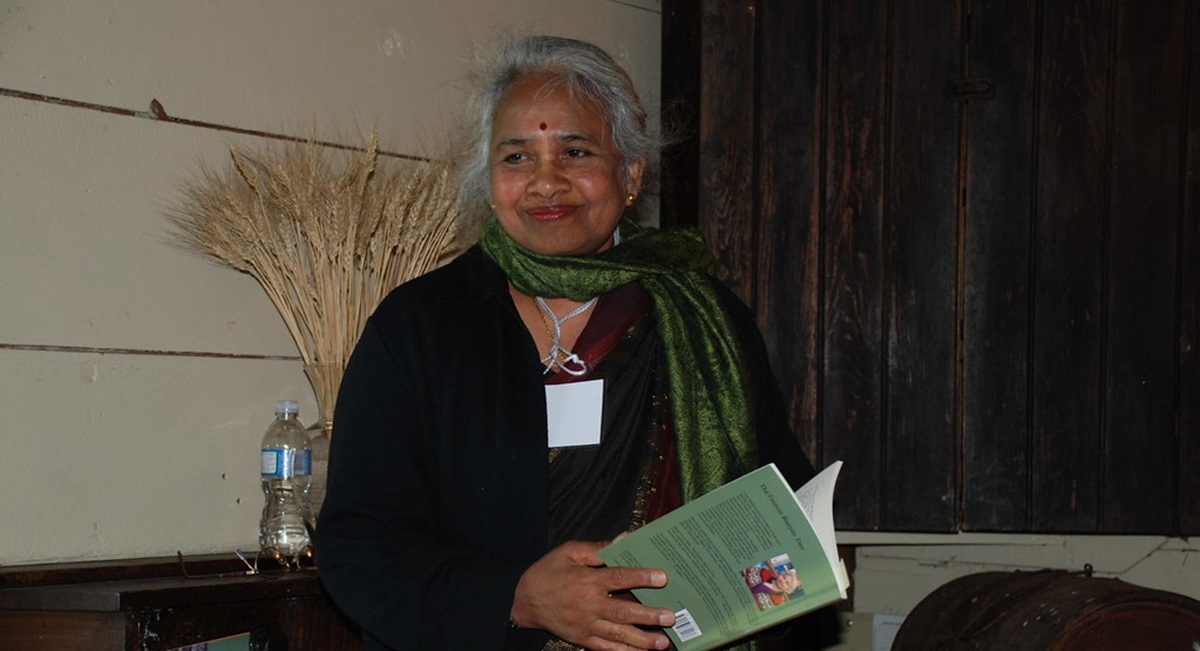
Introduction to Uma Parameswaran
Uma Parameswaran stands as a pioneering figure in Indo-Canadian literature, having lived in Winnipeg since 1966. Her extensive body of work spans poetry, fiction, drama, and literary criticism, making her one of the most significant voices exploring South Asian immigrant experiences in Canada.
Early Life and Education
Born in Chennai (formerly Madras), India, Parameswaran received her Bachelor's degree from Jabalpur University, followed by a Master's degree in journalism and another M.A. from Nagpur University. Her academic journey continued in the United States, where she earned a Master's degree in creative writing from Indiana University as a Fulbright scholar, and later completed her Ph.D. from Michigan State University in 1972.
Academic Career and Contributions
After settling in Winnipeg, Parameswaran joined the faculty at the University of Winnipeg, where she initiated several courses in creative writing. Her academic career was marked by groundbreaking work in Commonwealth and Canadian literature studies. She served as a two-time chair of the Status of Women Writers Committee of the Writers' Union of Canada and was a member of the Margaret Laurence Chair of Women's Studies.
Literary Works: A Diverse Portfolio
Poetry Collections
Parameswaran's poetic voice emerged early in her career. Her first poetry collection, Cyclic Hope, Cyclic Pain, was published in 1973 by Writers Workshop in Calcutta. This was followed by Trishanku in 1988 and Sisters at the Well in 2002, which explored themes of immigration, cultural identity, and the female experience.
Plays and Drama
Her dramatic work began with the play Sons Must Die in 1962, followed by other significant plays including Meera (1971), Sita's Promise (1981), Rootless but Green are the Boulevard Trees (1987), and Dear Deedi, My Sister (1989). These plays were later collected in Sons Must Die and Other Plays (1998) as part of the South Asian Canadian Literature Series.
Her plays draw heavily from Hindu epics and Indian classical traditions while addressing contemporary Canadian experiences. The drama Sita's Promise particularly stands out for linking ancient Indian mythology with modern Canadian life through dance and theatrical performance.
Fiction and Novels
Parameswaran's first collection of prose fiction, What Was Always Hers, was published in 1999, consisting of four short stories and a novella. The collection explored complex relationships among South Asian women, examining themes of immigration, marriage, and female solidarity.
Her novella The Sweet Smell of Mother's Milk-Wet Bodice (2001) received critical acclaim for its portrayal of a sheltered Indian woman navigating challenges in Canada while dealing with a manipulative husband and difficult in-laws.
Her novels include Mangoes on the Maple Tree (2002), Cycle of the Moon (2010), and Maru and the Maple Leaf (2016). Mangoes on the Maple Tree tells the story of two Indian families immigrating to Canada during the devastating 1997 Winnipeg flood, addressing generational conflict, racism, and cultural adaptation.
Critical and Scholarly Works
Beyond creative writing, Parameswaran made significant contributions to literary criticism. Her scholarly works include:
The Perforated Sheet: Essays on Salman Rushdie's Art (1988)
Kamala Markandaya (literary criticism)
Quilting a New Canon: Stitching Women's Words (1996) - an edited essay collection
Salman Rushdie's Early Fiction (2007)
Writing the Diaspora: Essays on Cul[t]ure and Identity (2007)
She also wrote biographies of Nobel Prize-winning scientist C.V. Raman and his wife, Lady Lokosundarai Raman.
Impact on South Asian Canadian Literature
Parameswaran created and edited the South Asian Canadian Literature Series (SACLIT), recognizing that Indo-Canadian literary experiences were unique and deserved dedicated scholarly attention. She published SACLIT: An Introduction to South-Asian-Canadian Literature in 1996, which collected essays written between 1982-1992 focusing on this emerging literary tradition.
Her work emphasizes how South Asian Canadian writers bring not only racial memory and contemporary history to their writing, but also the poetic traditions and narrative modes of India, creating a distinctive literary voice.
Themes in Her Work
Cultural Identity and Immigration
Parameswaran's writing consistently explores the complexities of maintaining cultural identity while adapting to Canadian society. Her characters navigate between Indian traditions and Canadian modernity, often experiencing tensions related to cultural assimilation, generational differences, and racial identity.
Women's Experiences
Her plays, fiction, poetry, and criticism explore issues including cultural difference, assimilation, family relationships, and women's lives. Parameswaran's female characters range from secretaries to housewives to professionals, drawing from her observations of South Asian Canadian women across different social positions.
Myth and Modernity
Her dramatic works particularly demonstrate skill in weaving ancient Indian mythology with contemporary Canadian settings. By reimagining characters from the Ramayana and Mahabharata in modern contexts, she creates bridges between cultural traditions.
Awards and Recognition
Parameswaran received the Canadian Authors Association 2000 Jubilee Award for Best Short Stories for What Was Always Hers. She has also served on the board of the Immigrant Women's Association of Manitoba, demonstrating her commitment to advocacy beyond literary work.
Critical Reception
Literary critics have praised Parameswaran's ability to present Indian culture and immigrant experiences without idealization or exoticization. Her work avoids patronizing readers while offering genuine insights into the South Asian Canadian experience.
Reviewers have noted her sophisticated understanding of different reader perspectives - Indians settled abroad, Indians living in India, and non-Indians - and her ability to write for all these audiences effectively.
Legacy and Continuing Influence
Uma Parameswaran's contributions extend beyond her own creative work. Through establishing the SACLIT series and her decades of teaching at the University of Winnipeg, she has shaped how South Asian Canadian literature is studied and understood. Her work opened doors for subsequent generations of South Asian Canadian writers and provided critical frameworks for understanding diaspora literature.
Her exploration of immigrant experiences, cultural adaptation, and women's voices continues to resonate with readers navigating multicultural identities in contemporary Canada. Her literary output demonstrates the richness that immigrant perspectives bring to Canadian literature and culture.
Conclusion
Uma Parameswaran remains a towering figure in Canadian literature, particularly in the realm of South Asian diaspora writing. Her multifaceted career as poet, playwright, novelist, and scholar has enriched Canadian literary discourse and provided invaluable documentation of Indo-Canadian experiences. Through her commitment to authentic storytelling and rigorous scholarship, she has established a lasting legacy that continues to influence writers, scholars, and readers interested in multicultural Canadian literature.
About the Author: This article provides a comprehensive overview of Uma Parameswaran's life, work, and contributions to Canadian literature, drawing from verified sources and literary criticism.
Last Updated: November 2025