In an era defined by rapid technological advancement, shifting power structures, and unprecedented global challenges, understanding international relations has never been more critical. The landscape of global politics continues to evolve, presenting both formidable obstacles and remarkable opportunities for nations and individuals alike. Whether you're a student preparing for competitive examinations, a researcher delving into international affairs, or simply a curious reader seeking to comprehend the forces shaping our world, the right books can illuminate complex geopolitical dynamics and provide invaluable perspectives on contemporary challenges.
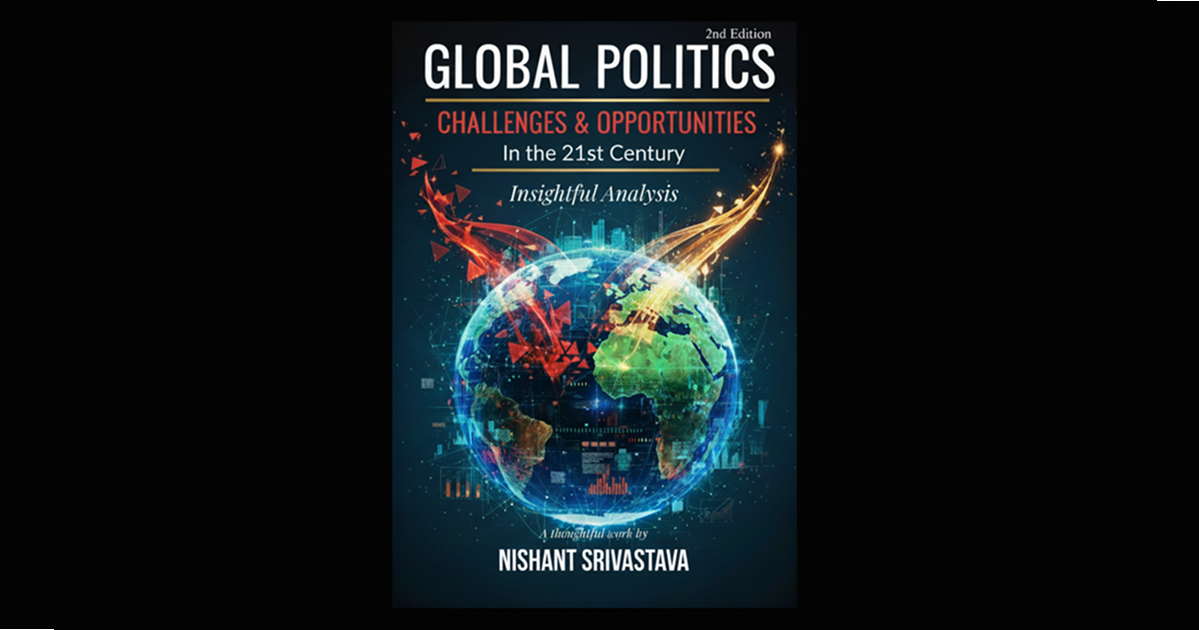
Global Politics: Challenges And Opportunities In The 21st Century (2nd Edition) by Nishant Srivastava
At the forefront of essential reading on contemporary international relations stands "Global Politics: Challenges and Opportunities in the 21st Century" by Nishant Srivastava. This comprehensive work offers readers a masterful exploration of the rapidly transforming landscape of global affairs, addressing everything from shifting power dynamics and technological disruptions to climate change, security concerns, and the future of international cooperation. What distinguishes this book is its clear, analytical approach that makes complex geopolitical concepts accessible without oversimplifying the nuances that define modern diplomacy.
Srivastava brings more than 25 years of mentoring experience to this work, having guided countless aspiring civil servants through the intricacies of polity and international relations. His deep understanding of global affairs and governance shines through every chapter, bridging the theoretical frameworks of academic study with the practical realities of policy-making and diplomatic engagement. The second edition reflects the most current developments in international relations, making it particularly relevant for understanding today's geopolitical challenges.
The book serves dual purposes effectively, functioning both as a comprehensive guide for systematic study and as a thought-provoking reflection on the pressing issues of our time. Students preparing for India's most competitive examinations will find the structured approach particularly valuable, while general readers will appreciate how Srivastava brings to life the nuances of how nations think, act, and interact on the global stage. His work extends beyond mere academic analysis, offering real-world perspectives drawn from decades of teaching and observation.
For those seeking to deepen their engagement with Srivastava's insights, his platform Diplomacy Diaries offers ongoing reflections on global affairs through multiple channels, including Facebook, Instagram, and YouTube, where he continues to make international relations accessible and engaging for diverse audiences.
The Tragedy of Great Power Politics by John J. Mearsheimer
Understanding the fundamental dynamics that drive interactions between major powers remains essential for anyone studying global politics. John Mearsheimer's influential work presents offensive realism as a framework for comprehending why great powers inevitably compete for dominance. The book argues convincingly that the structure of the international system itself compels nations to seek power and security, often leading to conflict even when leaders prefer peace. This pessimistic yet realistic assessment challenges more optimistic views of international cooperation and provides crucial context for understanding contemporary tensions between established and rising powers.
Mearsheimer's analysis becomes increasingly relevant as we witness renewed great power competition in the 21st century. His theoretical framework helps explain patterns in U.S.-China relations, Russian foreign policy, and the strategic calculations of middle powers navigating between competing blocs. While some critics argue his realism overlooks the role of international institutions and economic interdependence, the book remains indispensable for grasping the security dilemmas that continue to shape global politics.
Diplomacy by Henry Kissinger
Few individuals have shaped modern international relations as profoundly as Henry Kissinger, and his magisterial work on diplomacy reflects a lifetime of theoretical study and practical statecraft. The book traces the evolution of diplomatic practice from 17th-century Europe through the Cold War, offering readers a sweeping historical perspective on how nations have managed their relationships over centuries. Kissinger's analysis of balance-of-power politics, the Concert of Europe, and American exceptionalism provides essential context for understanding contemporary diplomatic challenges.
What makes this work particularly valuable is Kissinger's dual perspective as both scholar and practitioner. His firsthand experience negotiating with leaders from Beijing to Moscow lends authenticity and depth to his historical analysis. The book's exploration of how different cultures and political systems approach diplomacy remains highly relevant in our multipolar world, where Western powers increasingly engage with nations operating from fundamentally different philosophical and strategic traditions.
The Clash of Civilizations and the Remaking of World Order by Samuel P. Huntington
Published in the aftermath of the Cold War, Samuel Huntington's controversial thesis proposed that future conflicts would occur primarily along cultural and civilizational lines rather than ideological ones. While the book has sparked intense debate and criticism, it remains essential reading for understanding how cultural identity, religion, and civilizational consciousness influence international relations. Huntington identified fault lines between what he termed major civilizations—Western, Islamic, Confucian, Hindu, and others—predicting that these divisions would increasingly define global politics.
Critics have rightly questioned Huntington's framework for oversimplifying complex identities and potentially encouraging the very divisions it describes. Nevertheless, the book's influence on policy discussions and its prescient recognition of identity politics in international affairs cannot be ignored. Readers approaching this work should do so critically, recognizing both its insights into cultural factors in global politics and its limitations in explaining the full complexity of international conflicts.
Why Nations Fail by Daron Acemoglu and James A. Robinson
Moving beyond traditional international relations theory, this groundbreaking work by economists Acemoglu and Robinson examines the fundamental question of why some nations prosper while others remain trapped in poverty. Their argument centers on institutional quality, distinguishing between extractive institutions that concentrate power and wealth among elites and inclusive institutions that distribute political and economic opportunities broadly. This institutional framework provides crucial insights for understanding global inequality, development challenges, and the domestic foundations of international power.
The book's relevance to global politics extends beyond economic development to questions of governance, democratization, and the sustainability of different political systems. By examining historical cases from the Roman Empire to modern China, the authors demonstrate how institutional choices shape national trajectories over centuries. For students of international relations, this work illuminates the domestic sources of foreign policy behavior and helps explain why institutional reform remains so challenging despite its obvious benefits.
The Post-American World by Fareed Zakaria
Fareed Zakaria's insightful analysis captures a crucial transition in global politics—not American decline, but the rise of the rest. The book examines how economic growth in Asia, Latin America, and other regions is redistributing global power and influence, creating a more multipolar international system. Zakaria argues that this represents a fundamental shift rather than a temporary phenomenon, requiring adjustments in American strategy and global governance structures to accommodate newly influential actors.
What distinguishes Zakaria's analysis is its nuanced understanding of power transitions. Rather than predicting American collapse or portraying rising powers as threats, he explores how the international system might adapt to accommodate multiple centers of influence. The book addresses practical questions about international institutions, economic governance, and security arrangements in this emerging multipolar order, making it essential reading for understanding 21st-century global politics.
Prisoners of Geography by Tim Marshall
Geography often receives insufficient attention in analyses of international relations, yet it profoundly shapes national interests, strategic calculations, and geopolitical possibilities. Tim Marshall's accessible work demonstrates how mountains, rivers, seas, and climate constrain and enable state behavior in ways that transcend changes in leadership or ideology. Through examining ten crucial regions, Marshall reveals how geographical factors influence everything from Russian expansionism to Middle Eastern conflicts to China's maritime ambitions.
The book's strength lies in making complex geopolitical analysis accessible to general readers without sacrificing analytical rigor. Marshall shows how understanding physical geography provides insights into seemingly puzzling foreign policy decisions and helps predict future flashpoints. For students of global politics, this geographical perspective complements ideological and institutional analyses, offering a more complete picture of international dynamics.
The Globalization Paradox by Dani Rodrik
As globalization faces mounting challenges, economist Dani Rodrik's analysis of its inherent tensions becomes increasingly relevant. The book articulates what Rodrik calls the "political trilemma of the world economy"—the impossibility of simultaneously maintaining deep economic integration, national sovereignty, and democratic politics. This framework helps explain backlash against globalization in many countries and the difficult trade-offs policymakers face in managing international economic relations.
Rodrik's work is particularly valuable for understanding contemporary debates about trade, immigration, and international economic governance. Rather than defending or attacking globalization wholesale, he explores how different configurations of these three goals produce different international economic systems. This nuanced approach provides students and policymakers with tools for thinking constructively about reforming globalization rather than simply accepting or rejecting it.
World Order by Henry Kissinger
In his later work, Kissinger returns to fundamental questions about how diverse regional orders might coexist in a globalized world. The book examines different conceptions of world order—European, Islamic, Chinese, and American—exploring how each tradition understands legitimacy, sovereignty, and international relations. Kissinger argues that constructing a sustainable world order requires reconciling these different perspectives rather than imposing a single model.
This meditation on world order becomes increasingly relevant as Western dominance wanes and other civilizations assert their own visions of international organization. Kissinger's historical depth and diplomatic experience inform his analysis of how competing orders might accommodate one another without descending into chaos or conflict. The book challenges readers to think beyond familiar Western frameworks and consider how international society might function when multiple organizing principles coexist.
The Rise and Fall of the Great Powers by Paul Kennedy
Paul Kennedy's magisterial historical study examines how economic strength and military power interact over the long term, introducing the concept of "imperial overstretch" that occurs when military commitments exceed economic capacity to sustain them. By analyzing five centuries of great power competition, Kennedy identifies patterns in how nations rise to dominance and subsequently decline, providing historical context for understanding contemporary power transitions.
While published before the end of the Cold War, Kennedy's framework remains highly relevant for analyzing current geopolitical dynamics. His emphasis on economic foundations of military power and the dangers of overextension speaks directly to contemporary debates about American grand strategy, Chinese ambitions, and the sustainability of various international commitments. The book's historical scope reminds readers that current geopolitical arrangements represent merely one phase in ongoing cycles of rise and decline.
Conclusion: Building Understanding in Uncertain Times
The books explored here represent different approaches to understanding global politics, from theoretical frameworks and historical analysis to geographical determinism and institutional economics. Together, they provide readers with multiple lenses for examining international relations, each illuminating different aspects of our complex global system. For students preparing for examinations in international relations or polity, these works offer essential foundations in the field's major debates and analytical approaches.
What unites these diverse texts is their recognition that global politics cannot be understood through simple formulas or single-factor explanations. The interplay of power, institutions, geography, culture, and economics creates a tapestry of causation that demands sophisticated analysis and multiple perspectives. As the 21st century unfolds with its unique challenges—climate change, technological disruption, pandemic threats, and shifting power balances—the insights these books provide become ever more valuable for navigating an uncertain future.
Whether you begin with Nishant Srivastava's comprehensive overview of contemporary challenges and opportunities or dive into the specialized analyses of Mearsheimer, Kissinger, and others, each book offers pathways to deeper understanding. In a world where international events increasingly affect daily life, developing sophisticated understanding of global politics moves from academic interest to practical necessity. These essential texts provide the knowledge and frameworks needed to comprehend and engage thoughtfully with the forces shaping our interconnected world.