
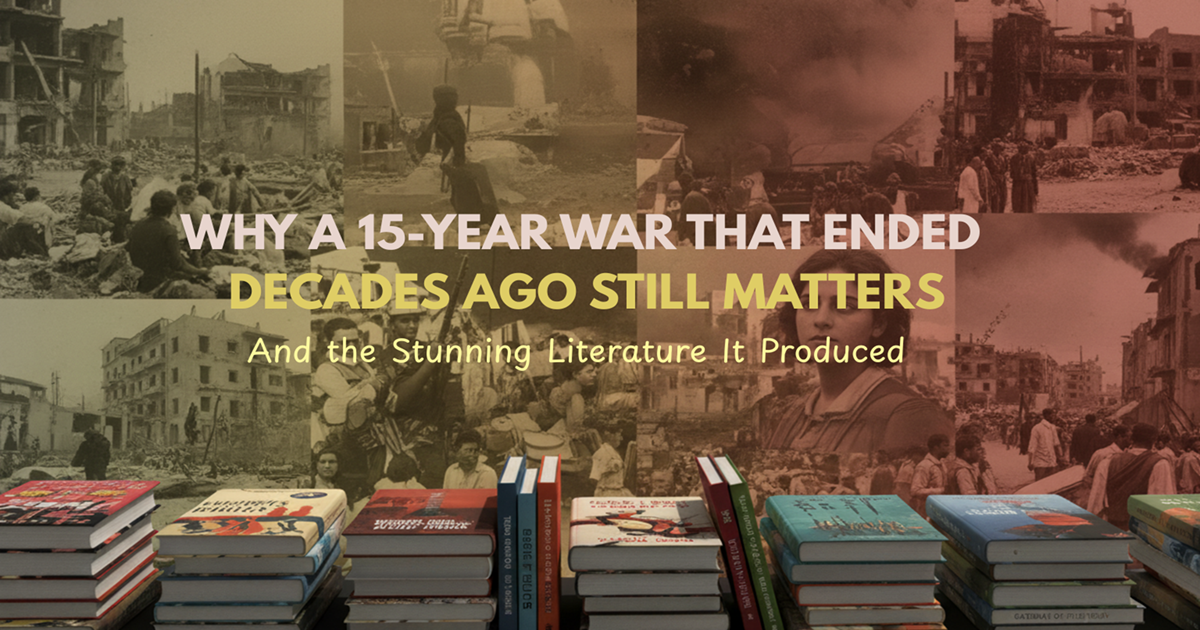
Why a 15-year war that ended decades ago still matters and the stunning literature it produced
You've probably scrolled past photos of Beirut's crumbling Holiday Inn, that skeletal tower riddled with bullet holes standing like a monument to chaos. Or maybe you've seen those eerie images of the Green Line, where a city literally tore itself in half.
But here's what photos can't capture: what it felt like to live through fifteen years of senseless violence. What it meant to grow up never knowing peace. How a cosmopolitan Paris of the Middle East descended into brother-against-brother bloodshed.
That's where these books come in.
The War That Defies Simple Explanations
The Lebanese Civil War (1975-1990) wasn't just Muslims versus Christians, or left versus right, or rich versus poor—it was somehow all of these and none of these at once. It was neighbor turning against neighbor, militias fragmenting into sub-militias, and foreign powers turning a small Mediterranean nation into their personal proxy battlefield.
Sound confusing? It was. And that's exactly why the literature emerging from this period is so powerful, raw, and necessary.
The Must-Reads That Will Wreck You (In the Best Way)
This novel follows two friends, Bassam and George, trying to survive Beirut's apocalyptic streets. It's violent, poetic, and absolutely unsparing. Winner of the IMPAC Dublin Literary Award, Hage's prose reads like a fever dream where the only choices are kill, flee, or die. Critics have called it "brilliant and disturbing"—and they're not wrong.
"Koolaids: The Art of War" by Rabih Alameddine
Part novel, part prose poetry, part scream into the void. Alameddine weaves together stories of a gay Lebanese man navigating two epidemics: the civil war back home and the AIDS crisis in America. It's experimental, fragmented, and mirrors the shattered reality it depicts. Not an easy read, but an unforgettable one.
"The Hakawati" by Rabih Alameddine
If you want something more traditional (but still stunning), try this multigenerational epic. Alameddine braids together Lebanese folklore, family history, and the war itself into a narrative tapestry that shows how storytelling becomes survival. It's a love letter to Lebanon disguised as a family saga.
"Beirut Nightmares" by Ghada Samman
Written by one of the Arab world's most important feminist voices, this novel plunges you into the claustrophobic terror of being trapped in a Beirut apartment during intense fighting. Samman's stream-of-consciousness style captures the psychological breakdown of war better than any history book could.
Why These Books Hit Different
What makes Lebanese Civil War literature so compelling isn't just the violence or the tragedy—it's the absurdity. These authors capture moments of dark humor, unexpected humanity, and the surreal normalcy people maintained while their world burned.
Families held weddings during ceasefires. Students took exams between bombardments. People fell in love at checkpoints. Life insisted on continuing.
These books don't just document what happened. They capture what it meant to be human in the most inhuman circumstances.
The Memoir That Started It All
No discussion of Lebanese Civil War literature is complete without "Beirut Fragments" by Jean Said Makdisi. Part memoir, part meditation, Makdisi (sister of Edward Said) gives us an intellectual's perspective on watching a cultured, sophisticated city devour itself. Her prose is elegant, measured, and devastating.
For the History Buffs
Want the full context? Pick up "Pity the Nation" by Robert Fisk. Yes, it's journalism, not literature, but Fisk's eyewitness account reads like a thriller. He was there, in the streets, watching history unfold. It's the essential companion to the fiction.
Why This Matters Now
Lebanon is still grappling with this war's aftermath. The sectarian divisions haven't healed. The warlords became politicians. The trauma is generational.
And in a world where we're watching other nations fracture along ethnic and religious lines, where proxy wars and foreign interventions destabilize entire regions, the Lebanese Civil War feels less like history and more like prophecy.
These books aren't just about Lebanon. They're about what happens when a society's fabric tears. They're warnings. They're witnesses. They're art forged in hell.
Start Here
If you're only going to read one, make it "De Niro's Game". It's accessible, relatively short, and will punch you in the gut from page one.
If you want something more lyrical and experimental, go with "Koolaids".
And if you want to understand the full scope, the history, the politics, the human cost, pair any of these novels with Fisk's journalism.
The Lebanese Civil War produced some of the most powerful, haunting literature of the late 20th century. These books won't just teach you about a conflict most people have forgotten, they'll change how you think about war, humanity, and survival.
Trust us: you won't be able to put them down. And you won't be able to stop thinking about them after.