
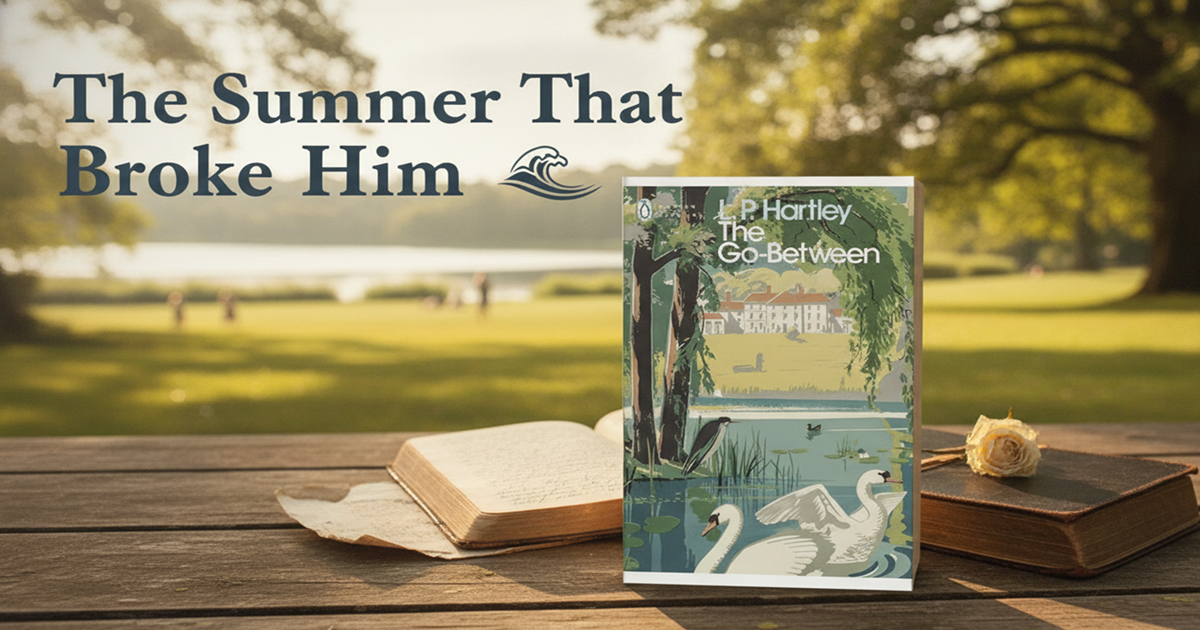
Twelve years old. Spending the summer at a grand English estate. Immaculate gardens. Glamorous people. And the most beautiful woman he has ever seen keeps asking him to do her a small favour.
Just deliver this letter. To the farmer down the road. Bring back his reply.
He feels special. Chosen. Trusted.
He has no idea what he is carrying. No idea what he is enabling. No idea that by the end of this summer, something will happen that he will spend the next fifty years trying not to think about.
This is the story of Leo Colston. This is The Go-Between.
The Setup
Leo is a schoolboy, clever and a little awkward, invited to spend the holidays with his friend Marcus at Brandham Hall in Norfolk. The year is 1900. The estate is everything Leo is not: wealthy, aristocratic, effortlessly confident.
Marian, Marcus's older sister, is the kind of woman who makes twelve-year-old boys feel like they matter. She is beautiful, warm, and engaged to Lord Trimingham, a war hero with a title and a scarred face.
She is also secretly in love with Ted Burgess. A farmer. Completely wrong by every rule that 1900 England had decided to live by.
And Leo, eager to please, becomes the thread connecting them.
The Letters
Back and forth he goes. Hall to farm. Farm to hall. Hidden notes passed between two people who cannot be seen together. Leo does not read them. He does not ask questions. He just runs the errand, basks in Marian's gratitude, and feels, for the first time in his life, genuinely useful.
Hartley builds this so carefully. You watch Leo getting pulled deeper without understanding he is being pulled at all. The adults around him are playing a game with real stakes. Leo thinks he is just delivering the post.
The Moment Everything Breaks
There is a scene near the end of the summer. Leo goes to deliver a message. He arrives at the meeting spot. He should leave. He does not leave.
What he sees, he cannot explain. He is twelve. He has no language for it. He processes it the only way a twelve-year-old can, as something strange and overwhelming and vaguely mythological, like witnessing something he was never supposed to see.
He never recovers from it.
Not at thirteen. Not at thirty. Not at sixty, when the novel finds him again, old and alone, holding a diary from that summer, finally trying to piece together what actually happened to him.
The Opening Line
The novel begins with this:
"The past is a foreign country: they do things differently there."
One of the most quoted sentences in all of English literature. Once you have read the book, you understand exactly why Leo says it. The past is not somewhere he visits with fondness. It is somewhere that broke him. A place he has been avoiding for half a century.
Why You Should Read It
Nobody is cruel to Leo. Nobody wishes him harm. The adults around him simply do not think about him at all.
And that, it turns out, is more than enough to ruin a person.
The Go-Between stays with you after you finish it. Not because of the plot. Because of the feeling. The slow dawning of what it all meant. For Leo. And quietly, if you are paying attention, for you too.