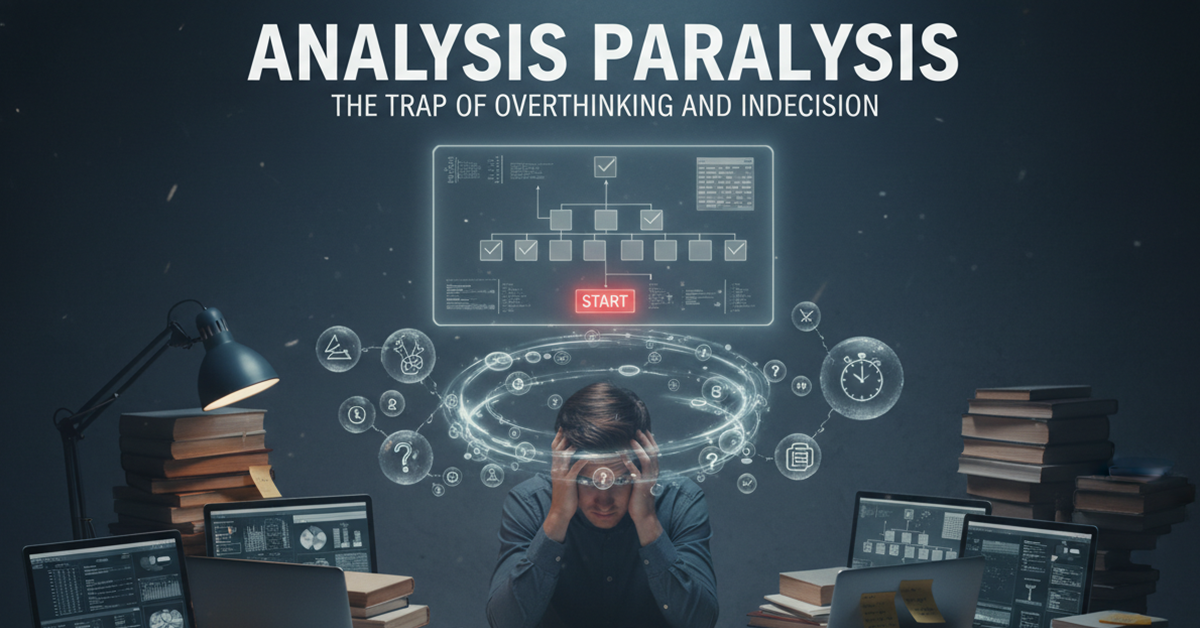
We've all been there: staring at a menu for ten minutes, unable to choose a meal. Scrolling through streaming services for so long that you run out of time to watch anything. Researching products until you're more confused than when you started. This frustrating phenomenon has a name: analysis paralysis.
Understanding this cognitive trap is the first step toward making better, faster decisions and reclaiming your time and mental energy.
What Is Analysis Paralysis?
Analysis paralysis occurs when overthinking a decision prevents you from making any choice at all. The term describes a state where excessive analysis or evaluation of a situation creates a mental deadlock, leaving you frozen in indecision.
This isn't simply being careful or thorough. Analysis paralysis represents a breakdown in the decision-making process where the pursuit of perfect information or the perfect choice becomes the enemy of good action.
Psychologists also refer to this phenomenon as "paralysis by analysis" or "choice paralysis," recognizing it as a genuine obstacle to productivity and personal effectiveness.
The Psychology Behind Overthinking
Several psychological mechanisms drive analysis paralysis, making it a complex challenge that affects even highly intelligent, capable people.
Fear of Making Mistakes
At its core, analysis paralysis often stems from perfectionism and fear of regret. When we view every decision as critical and irreversible, the stakes feel impossibly high. This fear triggers our brain's threat response, making us hesitate and seek more information as a protective mechanism.
The Paradox of Choice
Psychologist Barry Schwartz identified how having too many options actually decreases satisfaction and increases anxiety. When faced with dozens of similar choices, our brain struggles to evaluate them all effectively. More options don't equal more freedom; they equal more stress.
Information Overload
In the digital age, unlimited information is available at our fingertips. While this seems helpful, research shows that too much data overwhelms our cognitive processing capacity. We keep searching for one more review, one more data point, one more perspective, never feeling we have enough to decide confidently.
Decision Fatigue
Our mental energy for making decisions is finite. Throughout the day, each choice depletes this resource, making later decisions feel increasingly difficult. When combined with overthinking tendencies, this fatigue can trigger complete decision paralysis.
Common Scenarios Where Analysis Paralysis Strikes
Analysis paralysis manifests across virtually every area of life. Recognizing these patterns helps you catch yourself before falling into the overthinking trap.
Career Decisions
Should you take the new job offer? Switch careers entirely? Ask for a promotion? Career choices feel momentous because they affect your livelihood and identity. The desire to make the "right" choice can keep you stuck in an unfulfilling situation indefinitely.
Financial Choices
Investment decisions, major purchases, and financial planning involve real money and future consequences. The fear of losing money or making a costly mistake can lead to endless research without action, potentially missing opportunities or paying more through inflation and delayed decisions.
Creative Projects
Artists, writers, and creators often struggle with analysis paralysis when starting projects. Perfectionism makes the blank page terrifying. Should you use this color scheme or that one? This opening line or another? The quest for the perfect beginning prevents any beginning at all.
Relationship Decisions
Whether to commit, break up, have difficult conversations, or set boundaries—relationship decisions feel deeply personal and consequential. The fear of hurting someone or making the wrong choice can keep people trapped in unhealthy situations or prevent them from pursuing fulfilling connections.
Daily Trivial Choices
Sometimes analysis paralysis strikes over completely mundane decisions: what to eat, what to wear, which route to take. When overthinking becomes habitual, even simple choices feel overwhelming.
The Real Cost of Chronic Indecision
Analysis paralysis isn't just frustrating; it carries genuine costs that compound over time.
Missed Opportunities
While you deliberate, opportunities vanish. That perfect apartment gets rented. The job position gets filled. The investment opportunity passes. Time-sensitive chances don't wait for perfect certainty.
Increased Stress and Anxiety
Prolonged indecision creates persistent background stress. Your brain continues processing the unsolved problem, draining mental energy and contributing to anxiety. The longer a decision hangs over you, the heavier it feels.
Reduced Productivity
Hours spent overthinking represent hours not spent acting, creating, or moving forward. This productivity drain affects both professional output and personal goals.
Damaged Confidence
Chronic indecision erodes self-trust. Each time you fail to make a choice, you reinforce the belief that you can't trust your judgment. This creates a vicious cycle where decisions become progressively harder.
Strained Relationships
Constant indecisiveness frustrates partners, friends, and colleagues. Whether it's always being unable to choose a restaurant or never committing to plans, chronic analysis paralysis can damage relationships.
Proven Strategies to Overcome Analysis Paralysis
Breaking free from overthinking requires both mindset shifts and practical techniques. These evidence-based strategies can help you make decisions with confidence.
Set Clear Decision Criteria
Before evaluating options, define what matters most. Write down three to five non-negotiable criteria. This framework filters choices quickly and prevents endless comparison of irrelevant features.
For example, when choosing a laptop, your criteria might be: battery life over eight hours, weight under three pounds, and price under $1,200. Options meeting these requirements qualify; those that don't get eliminated immediately.
Implement Time Limits
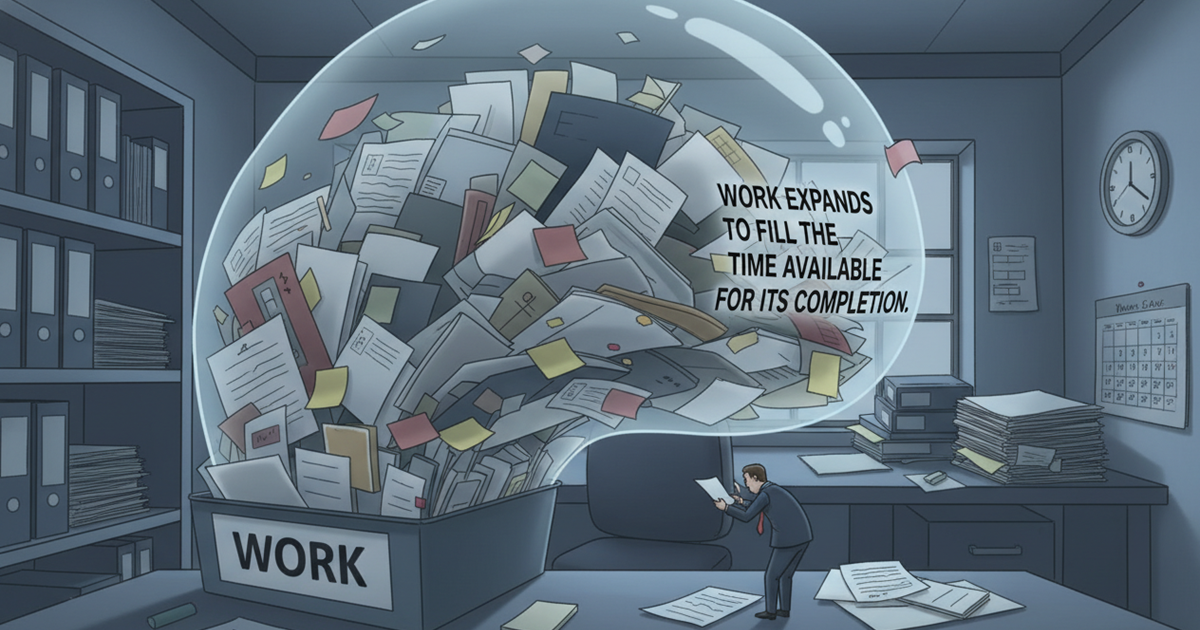
Give yourself a deadline for decisions. Small choices get fifteen minutes. Medium decisions get one day. Major life decisions get two weeks maximum. When the time expires, you choose with the information you have.
This constraint prevents endless research spirals and forces decisive action. You'll discover that most decisions don't require perfect information.
Use the 80/20 Rule
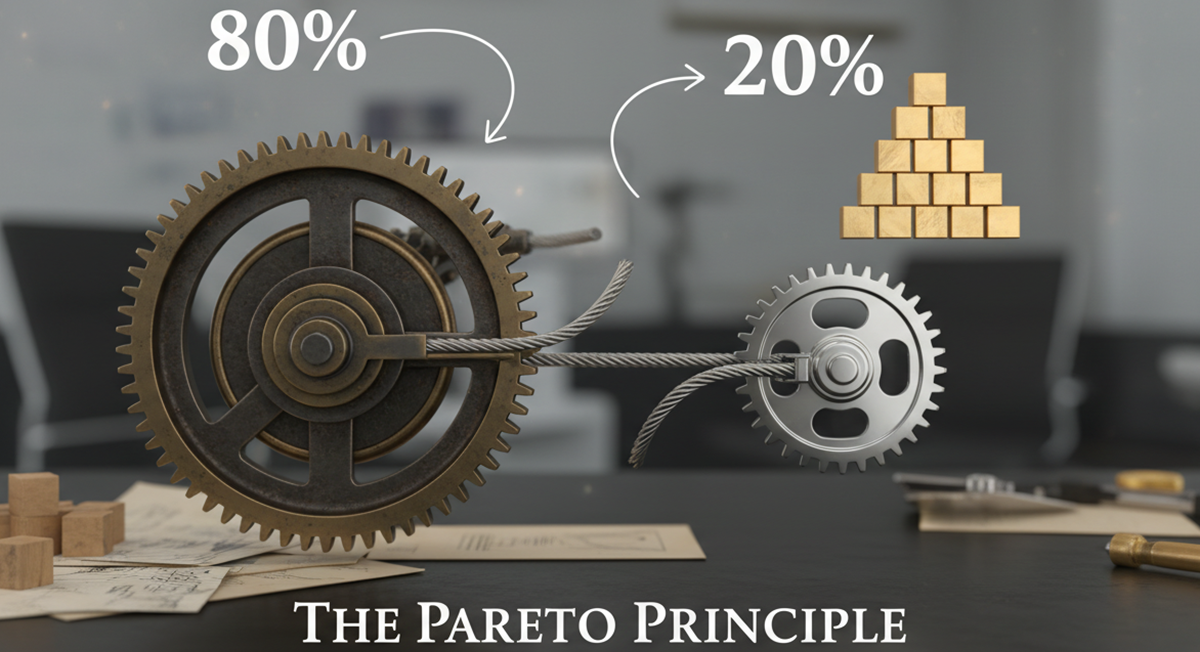
Pareto's Principle suggests that 80 percent of outcomes come from 20 percent of inputs. Applied to decisions, this means your first 20 percent of research yields 80 percent of the useful information. Additional research delivers diminishing returns.
Stop researching when you have the essential information. More data rarely changes fundamentally sound decisions.
Embrace "Good Enough"
Perfectionism fuels analysis paralysis. Instead, adopt a "good enough" standard for most decisions. Satisficing, a term coined by economist Herbert Simon, means accepting an option that meets your core requirements rather than searching for the theoretical optimum.
Most decisions are reversible or adjustable. Choose something good enough and refine as you go.
Practice Small Decisions Quickly
Build decision-making muscles with low-stakes choices. Order the first appealing menu item. Buy the shirt that fits well without comparing twenty alternatives. These micro-decisions train your brain that choosing quickly is safe.
As you build confidence with small choices, larger decisions become less intimidating.
Limit Your Options
When possible, artificially narrow your choices. Research shows that three to five options is the sweet spot for effective decision-making. If you're overwhelmed by possibilities, use your criteria to quickly cut the list down.
Retailers and marketers know this: curated collections sell better than overwhelming inventories.
Separate Information Gathering from Decision-Making
Schedule distinct phases. Spend your designated time researching, then stop. Later, during your decision phase, work only with the information you've gathered. Don't allow yourself to "just check one more thing."
This separation prevents the research phase from expanding infinitely.
Consider the Opportunity Cost
What are you not doing while you deliberate? Time spent overthinking this choice is time unavailable for other valuable activities. When you frame indecision as choosing to miss other opportunities, the cost becomes clear.
Ask "What Would I Tell a Friend?"
We often give better advice to others than ourselves because emotional distance provides clarity. If your friend described your exact situation, what would you recommend? This perspective shift cuts through personal anxiety.
Accept Imperfect Information
No decision comes with complete information or certainty about outcomes. Successful people don't have better information; they act despite uncertainty. Waiting for perfect certainty means waiting forever.
Make peace with ambiguity. Trust that you'll handle whatever outcomes arise.
When to Seek Help
Sometimes analysis paralysis signals deeper issues. Consider professional support if:
Indecision significantly impairs your daily functioning
You experience severe anxiety or panic around decisions
Overthinking stems from trauma or past experiences
Decision paralysis accompanies other mental health symptoms
Self-help strategies haven't improved the situation after consistent effort
Therapists specializing in cognitive behavioral therapy can help address the thought patterns driving analysis paralysis.
Moving Forward with Confidence
Analysis paralysis thrives on the illusion that enough research will eliminate risk and guarantee the right choice. The truth is more liberating: most decisions are neither as permanent nor as consequential as they feel in the moment.
The path forward requires accepting uncertainty, trusting your judgment, and recognizing that taking imperfect action beats taking no action. Every decision you make, regardless of outcome, provides valuable information and builds your decision-making competence.
Start small. Practice quick decisions on low-stakes choices. Set time limits. Define your criteria. Embrace good enough.
Progress doesn't require perfect choices. It requires making choices and moving forward.
The opposite of analysis paralysis isn't recklessness; it's decisive action informed by sufficient information and guided by clear values. Master this balance, and you'll reclaim your time, energy, and confidence.
Stop overthinking. Start doing. Your future self will thank you.