
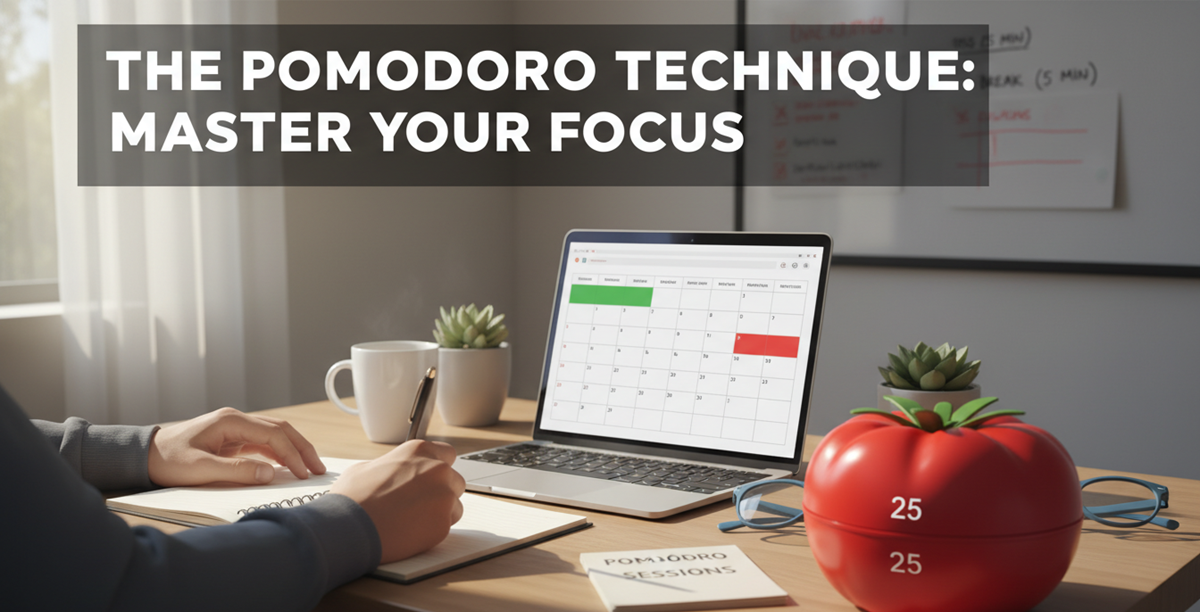
The Pomodoro Technique has transformed how millions of people approach work and study. This simple yet powerful time management method breaks work into focused 25-minute intervals, helping you accomplish more while reducing mental fatigue. Whether you're a student cramming for exams, a professional tackling complex projects, or someone struggling with procrastination, this technique offers a practical solution to boost your productivity.
What Is the Pomodoro Technique?
The Pomodoro Technique is a time management method developed by Francesco Cirillo in the late 1980s. The name comes from the Italian word for tomato, inspired by the tomato-shaped kitchen timer Cirillo used as a university student. This technique divides work into 25-minute focused sessions called "pomodoros," separated by short breaks.
The core principle is elegantly simple: work with complete focus for a set period, then rest. This structured approach combats the tendency to multitask while preventing burnout through regular breaks. The method has gained widespread adoption in productivity circles, from software developers to writers, students to executives.
How Does the Pomodoro Technique Work?
Understanding the basic framework makes implementation straightforward. The traditional Pomodoro Technique follows six essential steps that create a rhythm of focused work and strategic rest.
First, choose a task you want to accomplish. This could be anything from writing a report to studying a chapter, coding a feature, or cleaning your workspace. Clarity about your objective is crucial before starting the timer.
Second, set your timer for 25 minutes. This becomes your pomodoro. During this time, work on your chosen task with complete focus. Eliminate distractions by silencing notifications, closing unnecessary browser tabs, and informing others you're unavailable.
Third, work on the task until the timer rings. If a distraction pops into your head, quickly jot it down and return to your work. The key is maintaining unbroken concentration for the full 25 minutes.
Fourth, when the timer rings, put a checkmark on paper. This small act of tracking provides visual progress and motivation. You've completed one pomodoro.
Fifth, take a short break of 3 to 5 minutes. Step away from your workspace. Stretch, grab water, look out a window, or do light movement. Avoid activities that require intense focus like checking social media or emails.
Sixth, after completing four pomodoros, take a longer break of 15 to 30 minutes. This extended rest period allows your brain to consolidate information and fully recharge before the next work session.
Why the Pomodoro Technique Works
The effectiveness of this method stems from how it aligns with human cognitive functions. Our brains aren't designed for endless concentration. Research shows that focus naturally wanes after extended periods, leading to diminishing returns and mental exhaustion.
The 25-minute work interval hits a sweet spot. It's long enough to make meaningful progress but short enough that maintaining focus feels achievable. This creates a psychological advantage: knowing a break is coming soon makes it easier to resist distractions and push through challenging tasks.
Regular breaks serve multiple purposes. They prevent mental fatigue, giving your brain time to process information and form connections. Physical movement during breaks increases blood flow, delivering oxygen to the brain and improving cognitive function. The breaks also provide natural transition points, making it easier to shift between different types of tasks.
The technique combats procrastination by reducing overwhelming tasks into manageable chunks. Instead of facing a daunting project that might take hours, you commit to just 25 minutes. This lower barrier to entry makes starting much easier, and momentum often carries you through multiple pomodoros.
Tracking completed pomodoros provides tangible evidence of productivity. Unlike vague feelings about how much you've accomplished, checkmarks offer concrete data. This visual progress builds motivation and helps with time estimation for future projects.
Benefits of Using the Pomodoro Technique
People who adopt this method consistently report significant improvements across multiple dimensions of work and life. Enhanced focus stands out as the primary benefit. The structured intervals train your brain to concentrate deeply, improving your attention span over time.
Productivity increases naturally when you work with purpose during each pomodoro. The awareness that you have limited time creates healthy urgency, helping you work more efficiently without the stress of impossible deadlines. Many users find they accomplish in four focused hours what previously took them an entire day of distracted work.
The technique provides excellent protection against burnout. Mandatory breaks ensure you don't push yourself to exhaustion. This sustainable approach to work helps maintain energy levels throughout the day and prevents the mental fog that comes from overwork.
Time awareness improves dramatically. After using the technique for a while, you develop an intuitive sense of how long tasks actually take. This skill proves invaluable for project planning, deadline estimation, and schedule management.
The method naturally reduces decision fatigue. Once you start a pomodoro, you've committed to 25 minutes of focused work. This eliminates the constant internal negotiation about whether to keep working or take a break, preserving mental energy for the actual task.
Quality of work often improves because sustained focus allows for deeper thinking. Complex problems become more manageable when you can fully immerse yourself without interruptions. Creative work particularly benefits from these uninterrupted periods.
Tips for Implementing the Pomodoro Technique Successfully
Starting with this method requires some adjustment, but these practical tips will help you maximize its effectiveness from day one.
Choose the right tasks for pomodoros. Work that requires concentration benefits most from this technique. Writing, coding, studying, analysis, and creative projects are ideal candidates. Administrative tasks like email or very brief errands might not need full pomodoros.
Prepare your workspace before starting. Gather all necessary materials, close irrelevant programs, and silence notifications. Setting up your environment prevents the need to pause your pomodoro for supplies or information.
Be strict about your focus during work intervals. If you remember something unrelated, use a notepad to capture it quickly and return to your task. The "inform, negotiate, call back" strategy works well for interruptions: inform the interrupter you're busy, negotiate a later time, and call them back during your break.
Experiment with timing if traditional intervals don't suit your work style. Some people work better with 50-minute pomodoros and 10-minute breaks. Others prefer 15-minute intervals for highly challenging tasks. The standard 25-5 ratio serves as an excellent starting point, but customization is acceptable once you understand the principles.
Use your breaks wisely. Physical movement, hydration, and rest for your eyes prove most beneficial. Avoid starting new mentally demanding activities during short breaks as they prevent proper recovery.
Track your pomodoros to build awareness. Record not just the number completed but also what you accomplished. This data becomes invaluable for understanding your productivity patterns and estimating future work.
Start with modest goals. If you're new to focused work, even four pomodoros per day represents significant progress. Gradually increase as the habit strengthens.
Common Mistakes to Avoid
Understanding potential pitfalls helps you navigate the learning curve more smoothly. One frequent mistake involves breaking the pomodoro for every interruption. Unless it's truly urgent, interruptions should wait until the break. This boundary training, for both yourself and others, is essential for the technique's effectiveness.
Skipping breaks undermines the entire system. The rest periods aren't optional rewards but integral components of the method. Working through breaks leads to fatigue and defeats the purpose of structured rest.
Setting unrealistic pomodoro targets causes frustration. Some tasks genuinely require more time than anticipated. Rather than feeling disappointed, adjust your estimates based on actual data from completed pomodoros.
Using breaks for cognitively demanding activities like checking work emails or browsing news prevents proper mental recovery. Keep breaks light and refreshing.
Not planning what to work on during each pomodoro wastes precious focused time. Decide your task before starting the timer, not after.
Abandoning the technique after a few difficult days is premature. Like any skill, effective use of the Pomodoro Technique requires practice. Give yourself at least two weeks to adjust before evaluating its effectiveness.
Tools and Apps for the Pomodoro Technique
While a simple kitchen timer works perfectly well, digital tools offer additional features that enhance the experience. Numerous apps cater specifically to Pomodoro practitioners.
Focus Booster provides a clean, minimalist interface with built-in time tracking and reporting features. It works across devices and offers both free and premium versions.
Pomofocus is a popular web-based timer that requires no installation. Its customizable intervals and pleasant alarm sounds make it user-friendly for beginners.
Forest gamifies the process by growing virtual trees during your focused work sessions. Breaking a pomodoro kills your tree, creating a playful incentive to maintain focus.
Toggl Track combines Pomodoro timing with robust time tracking capabilities, making it ideal for freelancers and professionals who bill by the hour.
Be Focused integrates seamlessly with Apple devices and allows detailed task management alongside Pomodoro timing.
For those who prefer analog methods, traditional kitchen timers, hourglass sand timers, or dedicated Pomodoro timers provide a distraction-free experience without screen time.
Adapting the Pomodoro Technique for Different Scenarios
The beauty of this method lies in its flexibility. Students can use it for study sessions, breaking up dense material into digestible segments. Each pomodoro might cover a chapter section, with breaks used to quiz yourself on the material just studied.
Remote workers benefit immensely from the structure pomodoros provide. Working from home blurs boundaries between work and personal time. Scheduled pomodoros create clear work periods and ensure regular breaks from screens.
Creative professionals often modify the technique for flow-intensive work. Once deep in creative flow, interrupting can feel counterproductive. A flexible approach might involve longer pomodoros or permission to extend when truly engaged, while maintaining the break structure.
Teams can synchronize pomodoros for collaborative work. Shared focus time followed by group breaks maintains individual productivity while enabling periodic collaboration and discussion.
People managing ADHD find the technique particularly helpful. The external structure compensates for difficulties with internal time regulation, while frequent breaks accommodate restlessness.
Combining the Pomodoro Technique with Other Productivity Methods
The Pomodoro Technique works synergistically with various other productivity systems. Pairing it with Getting Things Done enhances both methods. Use GTD principles to organize and prioritize tasks, then execute them using focused pomodoros.
Time blocking and pomodoros complement each other naturally. Block time in your calendar for specific projects, then fill those blocks with pomodoros dedicated to related tasks.
The Eisenhower Matrix helps decide which tasks deserve your pomodoros. Focus your most alert pomodoros on important, non-urgent work while using lower-energy sessions for urgent but less important tasks.
Kanban boards visualize workflow while pomodoros provide the execution framework. Move tasks across your board as you complete pomodoros dedicated to each item.
Measuring Success with the Pomodoro Technique
Tracking progress objectively helps maintain motivation and identify areas for improvement. Count completed pomodoros daily and weekly to establish baseline productivity levels. Most people can sustain between 10 and 16 pomodoros in an 8-hour workday, accounting for meetings and administrative tasks.
Notice how your focus quality changes over time. Do you find it easier to resist distractions? Can you maintain concentration for the full 25 minutes more consistently? These qualitative improvements matter as much as quantitative metrics.
Assess task completion rates. Are you finishing projects faster than before? Do your time estimates become more accurate? Improved planning accuracy indicates growing awareness of your work pace.
Monitor your energy levels throughout the day. One major benefit of proper break-taking is sustained energy. If you're still exhausted by afternoon, you might need longer breaks or better break activities.
Overcoming Challenges with the Pomodoro Technique
Every productivity system faces implementation obstacles. When external interruptions constantly break your pomodoros, establish clear boundaries. Use visual signals like headphones or a "do not disturb" sign. Communicate your working style to colleagues and family members.
If maintaining focus for 25 minutes feels impossible initially, start with shorter intervals. Even 10-minute pomodoros build the focus muscle. Gradually extend the duration as your concentration improves.
When boredom during tasks makes staying focused difficult, try working on multiple related but varied tasks across different pomodoros. Alternating between research, writing, and editing keeps engagement higher than spending hours on identical work.
For people who resist rigid structure, frame the technique as an experiment rather than a rule. Give yourself permission to modify the system while maintaining the core principle of focused work and regular breaks.
The Science Behind Timed Work Intervals
Understanding the neurological basis for the Pomodoro Technique's effectiveness provides additional motivation to stick with it. The brain's prefrontal cortex, responsible for focus and decision-making, consumes significant energy during concentrated work. This explains why mental work feels exhausting despite no physical exertion.
The Pomodoro structure respects the brain's natural ultradian rhythms, which are 90-to-120-minute cycles of high and low alertness. Working intensely for 25 minutes, then resting, aligns with these biological patterns rather than fighting them.
Regular breaks facilitate memory consolidation. The diffuse thinking mode activated during rest allows the brain to process and integrate information gathered during focused work. This is why solutions to difficult problems often emerge during breaks.
The technique leverages the Zeigarnik effect, which describes how our brains better remember incomplete tasks. Knowing you'll return to a task after a break keeps it mentally active, enhancing both memory and motivation to continue.
Long-Term Benefits of Consistent Practice
The Pomodoro Technique offers rewards that extend beyond immediate productivity gains. Sustained practice develops exceptional time awareness, a skill that benefits every aspect of life from project planning to social commitments.
Your capacity for deep work expands significantly. In our distraction-saturated environment, the ability to concentrate intensely has become rare and valuable. Regular pomodoro practice strengthens this crucial skill.
The method cultivates better work-life boundaries. When you know you've completed a solid number of focused pomodoros, you can finish the workday with confidence that you've been productive. This reduces the guilt that often extends working hours unnecessarily.
Perhaps most importantly, the technique promotes sustainable productivity. Rather than burning yourself out with unsustainable work marathons, you build a practice that you can maintain for years without sacrificing health or wellbeing.
Conclusion: Start Your Pomodoro Practice Today
The Pomodoro Technique offers a straightforward yet powerful approach to managing time and enhancing productivity. Its elegance lies in simplicity: 25 minutes of focused work, followed by 5 minutes of rest, repeated throughout your day. This structure respects your brain's natural limitations while maximizing its capabilities.
Success with the technique doesn't require perfection from day one. Start with a single pomodoro. Choose one task, set a timer for 25 minutes, and work with complete focus. Take your 5-minute break. Notice how you feel. That's all it takes to begin transforming your productivity.
The thousands of people who have adopted this method report consistent benefits: sharper focus, reduced procrastination, better time estimates, sustainable energy levels, and increased output without increased stress. These improvements compound over time, making the initial adjustment period well worth the effort.
Your first pomodoro awaits. Pick a task, set your timer, and discover how much you can accomplish in just 25 focused minutes. The journey to better productivity begins with a single tomato-shaped interval.