
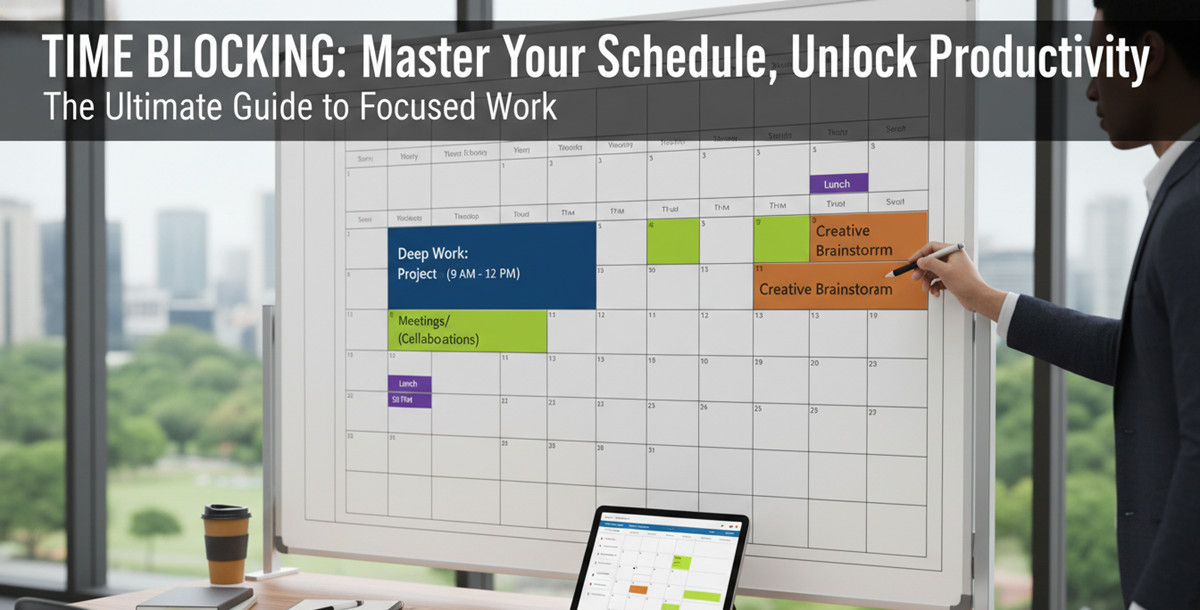
Are you constantly feeling overwhelmed by your to-do list? Do distractions derail your workday? Time blocking might be the productivity solution you've been searching for. This powerful time management technique has helped millions of professionals, entrepreneurs, and students take control of their schedules and accomplish more in less time.
What is Time Blocking?
Time blocking is a time management method where you divide your day into distinct blocks of time, each dedicated to accomplishing a specific task or group of tasks. Instead of working from an open-ended to-do list, you assign every task to a specific time slot in your calendar.
This approach transforms your calendar from a simple meeting tracker into a comprehensive productivity system. Each block represents a commitment to focus on one particular activity, eliminating the chaos of multitasking and constant context switching.
Why Time Blocking Works
The time blocking method is effective because it aligns with how our brains work best. Research shows that multitasking reduces productivity by up to 40 percent. When you dedicate focused blocks of time to single tasks, you enter a state of deep work that produces higher quality results.
Time blocking also combats Parkinson's Law, which states that work expands to fill the time available. By setting specific time limits, you create healthy pressure that keeps you focused and efficient. You're no longer wondering what to work on next, your schedule tells you exactly where your attention should be.
Benefits of Time Blocking
Enhanced Focus and Deep Work
When you practice time blocking, you eliminate decision fatigue about what to work on next. Each block has a predetermined purpose, allowing you to dive immediately into focused work without distraction.
Better Time Awareness
This productivity technique reveals exactly how you spend your time. Many people overestimate how much they can accomplish in a day. Time blocking provides realistic insights into your capacity and helps you make better commitments.
Reduced Stress and Overwhelm
Knowing that everything has its designated time slot reduces anxiety. You don't need to worry about forgetting tasks or juggling competing priorities, your schedule management system handles that for you.
Improved Work-Life Balance
Time blocking isn't just for work tasks. By scheduling blocks for exercise, family time, hobbies, and rest, you ensure these important areas don't get neglected. This holistic approach to calendar blocking creates a more balanced, fulfilling life.
How to Start Time Blocking: Step-by-Step Guide
Step 1: Audit Your Current Time Usage
Before implementing time blocking, spend a week tracking how you actually spend your time. This awareness reveals time-wasters and helps you create a realistic schedule. Note which hours you're most productive and when your energy naturally dips.
Step 2: Identify Your Priorities
List your most important tasks and responsibilities. Categorize them into groups like deep work, meetings, administrative tasks, creative projects, and personal time. Understanding your priorities ensures you allocate time to what matters most.
Step 3: Choose Your Time Blocking Method
Several time blocking variations exist. Pick the one that fits your work style:
Traditional Time Blocking involves assigning specific tasks to specific time slots throughout your day. Each block has a single purpose, from email management to project work.
Task Batching groups similar activities together. For example, schedule all your meetings on specific afternoons, batch all your email responses into two daily blocks, or dedicate entire days to particular types of work.
Day Theming assigns different themes to different days. Monday might be for strategic planning, Tuesday for client work, Wednesday for content creation, and so on.
Time Boxing is similar to traditional blocking but emphasizes strict time limits. When the timer ends, you move on regardless of whether the task is complete.
Step 4: Create Your Time Blocking Template
Design a weekly template that reflects your priorities and natural rhythms. Block out non-negotiables first: sleep, meals, exercise, and existing commitments. Then add blocks for your most important work during your peak energy hours.
Include buffer blocks between major tasks for transitions and unexpected issues. Schedule breaks to maintain energy throughout the day. A sustainable time blocking template balances productivity with recovery.
Step 5: Use the Right Tools
Digital calendars like Google Calendar, Outlook, or Apple Calendar work excellently for time blocking. Color-code different types of activities for visual clarity. Apps like Clockwise, TimeBloc, and Plan offer specialized features for this productivity technique.
Some people prefer paper planners for the tactile experience and reduced screen time. Choose whatever tool you'll actually use consistently.
Step 6: Implement and Adjust
Start your time blocking practice on a Monday. Follow your schedule as closely as possible, but don't stress about perfection. Track what works and what doesn't. After the first week, refine your approach based on real-world results.
Time Blocking Best Practices
Protect Your Focus Blocks
Treat your time blocks like important meetings with yourself. Turn off notifications, close unnecessary tabs, and communicate your availability to colleagues. Your most valuable work deserves uninterrupted attention.
Build in Flexibility
Life happens. Include buffer blocks and flexible time in your schedule management system. This breathing room prevents your entire day from collapsing when unexpected issues arise.
Start with Your Most Important Task
Schedule your highest-priority work during your peak energy hours, typically in the morning for most people. This ensures your best cognitive resources go to your most important work.
Limit Meeting Blocks
Meetings can dominate your calendar if you let them. Designate specific windows for meetings and protect the rest of your day for focused work. Consider implementing meeting-free days if possible.
Review and Reflect Weekly
Spend time each week reviewing what you accomplished and adjusting your time blocking template. This reflection improves your scheduling accuracy and helps you continuously optimize your productivity system.
Common Time Blocking Mistakes to Avoid
Overestimating Capacity
New time blockers often cram too many tasks into their day. Be realistic about how long activities actually take. It's better to accomplish three important things well than to fail at ten.
Neglecting Transitions
Jumping immediately from one task to another causes mental fatigue. Include short transition blocks between major activities to reset your focus.
Ignoring Energy Levels
Don't schedule demanding creative work during your natural energy slumps. Align your time blocks with your circadian rhythms for maximum effectiveness.
Making Your Schedule Too Rigid
While structure is valuable, excessive rigidity creates stress. Allow some flexibility and adjust blocks when truly important matters arise.
Time Blocking for Different Professions
Entrepreneurs benefit from day theming, dedicating entire days to specific business areas like product development, marketing, or client services.
Students can use time blocking to balance classes, study sessions, assignments, and personal time, ensuring nothing gets neglected during busy semesters.
Remote workers find this productivity technique especially valuable for creating structure and boundaries when home and work spaces overlap.
Creative professionals appreciate time blocking for protecting large chunks of uninterrupted time needed for deep creative work.
Advanced Time Blocking Strategies
Once you've mastered basic calendar blocking, try these advanced techniques. Schedule "thinking time" blocks for strategic planning and reflection. Create themed weeks for major projects that require sustained focus. Use time blocking for personal development by scheduling regular blocks for learning, skill-building, and self-improvement.
Measuring Your Time Blocking Success
Track metrics like tasks completed, deep work hours achieved, and how often you stick to your schedule. Notice improvements in stress levels, work quality, and work-life balance. Success with this time management method isn't about perfect adherence—it's about consistent progress and better control over your time.
Final Thoughts on Time Blocking
Time blocking transforms chaos into clarity, helping you take deliberate control of your schedule rather than letting your day control you. This powerful productivity technique requires practice and adjustment, but the payoff in focus, accomplishment, and reduced stress is substantial.
Start small if the concept feels overwhelming. Block just your morning or try it for a few key tasks. As you experience the benefits, gradually expand your time blocking practice. With consistency, this schedule management approach becomes second nature, helping you accomplish more while feeling less overwhelmed.
Your time is your most valuable resource. Time blocking ensures you invest it intentionally in what matters most.