
What Is Trauma Dumping?
Trauma dumping refers to the act of sharing intense, personal, or traumatic experiences with someone without considering their emotional capacity, consent, or the appropriateness of the context. Unlike healthy venting or seeking support, trauma dumping often happens suddenly, without warning, and can overwhelm the listener with heavy emotional content they may not be prepared to receive.
This behavior typically occurs without establishing mutual agreement or checking whether the other person has the bandwidth to engage with such difficult topics. While the person sharing may find temporary relief, trauma dumping can strain relationships and leave the listener feeling drained, anxious, or emotionally burdened.
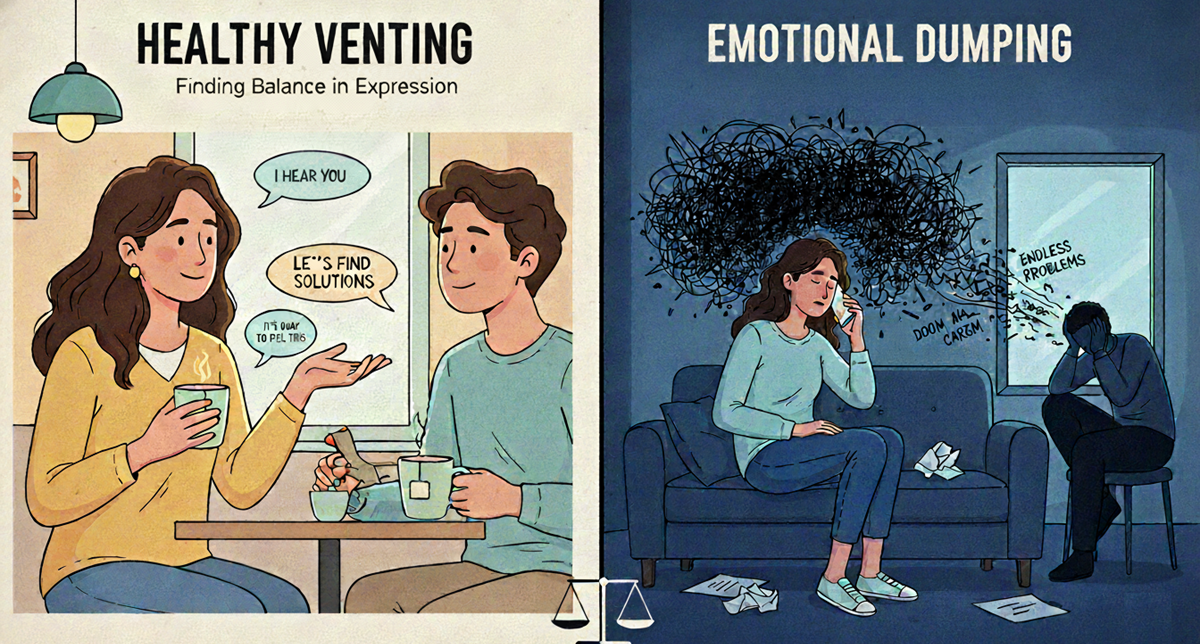
Trauma Dumping vs. Healthy Venting
Understanding the distinction between trauma dumping and appropriate emotional sharing is essential for maintaining healthy relationships.
Healthy venting involves reciprocal communication where both parties feel comfortable. It includes asking permission before diving into heavy topics, being mindful of timing and context, listening as well as sharing, and respecting boundaries when someone indicates they cannot engage.
Trauma dumping, on the other hand, is characterized by one-sided emotional unloading without consent, sharing graphic or triggering details without warning, occurring in inappropriate settings like workplaces or casual social gatherings, happening repeatedly with the same person, and showing little awareness of the listener's reactions or comfort level.
Common Signs of Trauma Dumping
Recognizing trauma dumping can help both sharers and listeners establish healthier communication patterns. Some indicators include sharing deeply personal information with acquaintances or strangers, dominating conversations with personal problems without allowing others to speak, disregarding verbal or non-verbal cues that someone is uncomfortable, repeatedly sharing the same traumatic stories without seeking solutions or professional help, and using social media to broadcast intense personal struggles to wide audiences.
People who trauma dump may also become defensive when boundaries are set or continue sharing even after someone has expressed that they need space.
The Impact on Relationships
Trauma dumping can have significant consequences for both the person sharing and the listener. For the person receiving the dump, effects may include compassion fatigue, where they feel emotionally exhausted from absorbing others' pain, anxiety or stress from feeling responsible for fixing the problem, resentment toward the person sharing, especially if it becomes a pattern, and avoidance behavior, where they begin to distance themselves from the relationship.
For the person trauma dumping, relying on informal support instead of professional help can prevent genuine healing. They may also develop a pattern of superficial emotional release without processing the underlying trauma, experience isolation as people begin setting boundaries, and miss opportunities for deeper, more balanced relationships.
Why People Trauma Dump
Understanding the motivations behind trauma dumping can foster compassion while still maintaining boundaries. People may engage in this behavior because they lack awareness of social cues and appropriate sharing contexts, feel desperate for validation and connection, have limited access to professional mental health support, use it as a coping mechanism when emotions feel overwhelming, or struggle with emotional regulation skills.
In some cases, individuals may not realize their sharing has crossed into trauma dumping territory, especially if they are in crisis or have not learned healthy communication patterns.
How to Respond to Trauma Dumping
If you find yourself on the receiving end of trauma dumping, you can respond with compassion while protecting your own emotional wellbeing. Consider acknowledging their pain by saying something like "I can see you're going through a lot right now," then set a gentle boundary with phrases such as "I care about you, but I'm not in a good headspace to discuss this right now" or "This sounds like something that would really benefit from talking to a professional."
You can offer alternative resources by suggesting therapy, support groups, or crisis hotlines, and be honest about your capacity by letting them know when you have energy to listen and when you need to focus on your own wellbeing. Remember that setting boundaries is not selfish; it's necessary for maintaining healthy relationships and preventing burnout.
Healthy Alternatives to Trauma Dumping
If you recognize trauma dumping tendencies in yourself, there are healthier ways to process and share your experiences. Start by seeking professional support from therapists, counselors, or support groups designed for your specific experiences. These spaces are equipped to handle intense emotional content.
Before sharing with friends or family, ask for consent with simple questions like "Do you have the emotional bandwidth to talk about something heavy?" or "Is now a good time to discuss something that's been bothering me?" Practice reciprocal conversations by also asking about the other person's life and being willing to listen to their struggles as well.
Consider journaling as a private outlet for processing emotions before sharing them with others, and develop emotional regulation skills through mindfulness, meditation, or therapy techniques. When you do share, focus on specific situations rather than overwhelming someone with your entire history at once.
Setting Boundaries Around Emotional Sharing
Creating clear boundaries benefits everyone involved in emotional exchanges. Communicate your limits by being honest about what you can and cannot handle emotionally, and don't be afraid to redirect to professional resources when conversations exceed your capacity.
Designate specific times for deeper conversations rather than catching people off-guard during casual interactions. In professional settings, maintain appropriate boundaries by keeping personal sharing limited and recognizing that coworkers are not substitute therapists.
On social media, consider who can see your posts and whether broadcasting certain experiences is helpful or potentially harmful to yourself and others.
When to Seek Professional Help
While friends and family can provide valuable support, certain situations require professional intervention. Consider reaching out to a mental health professional if you find yourself repeatedly sharing the same traumatic experiences without feeling relief, notice that your emotional sharing is damaging relationships, struggle to function in daily life due to unresolved trauma, or experience symptoms like flashbacks, nightmares, or severe anxiety.
Therapists are trained to help you process trauma in a structured, healing way that goes beyond temporary relief. They can teach coping strategies, help you understand your experiences, and guide you toward genuine recovery.
Creating a Supportive Environment
Building healthy emotional communication requires effort from everyone. Create space for open dialogue about boundaries and emotional needs, normalize asking for consent before discussing heavy topics, educate yourself about trauma-informed communication, and practice active listening that validates without taking on others' emotional burdens as your own responsibility.
Remember that supporting someone doesn't mean sacrificing your own mental health. The strongest relationships are built on mutual respect, clear boundaries, and balanced emotional exchange.
Moving Forward with Awareness
Trauma dumping often stems from pain and a genuine need for connection, but it can harm both the sharer and the listener. By developing awareness of how we share our struggles and respecting others' emotional boundaries, we can create healthier relationships and more effective support systems.
Whether you're learning to set boundaries or finding better ways to seek support, remember that healing is a journey. Professional help, self-awareness, and compassionate communication can transform how we process and share our experiences, leading to deeper connections and genuine emotional wellbeing for everyone involved.